If you type “Su-Kam” into a search engine today, you get fragments. An NCLT order here. A liquidation notice there. A case study that reads like an autopsy written by someone who never met the patient.
None of it answers the question people actually ask: how does a company that owned an entire product category — a brand trusted in crores of Indian homes, exporting to 90+ countries, filing patents at a pace no Indian competitor matched — simply disappear?
I was inside that company for many of those years. Here is the fuller answer, in the order it actually happened.
You have to understand the scale of what was lost
Kunwer Sachdev started Su-Kam in 1988 — first as a communications business, in the cable TV era. The company most Indians came to know was born a decade later, in 1998, when he took apart a broken inverter on his own table and rebuilt Su-Kam around power backup. Over the next two decades the company produced a string of India’s firsts: the first plastic-body inverter (the “Chic,” which won an India Today innovation award), the first DSP sinewave inverter, the first home UPS — a category name Kunwer himself coined and every competitor then copied — the first touchscreen solar PCU with Wi-Fi monitoring. The R&D centre ran two teams in competition with each other because Kunwer believed engineers ran faster with someone in the next lane.
At its peak, Su-Kam exported to more than 90 countries. In markets across Africa and the Middle East, Indian-made Su-Kam inverters pushed Chinese products off the shelves — not with tariffs, with reliability. That story is told in The China Bite and the Markets Nobody Was Looking At.
This matters because the standard narrative — “founder overreached, company collapsed” — is wrong. The machine was working. What broke was something else.
The part that was never in the business press
Here is the part that explains everything that followed.
In 2010, at the height of Su-Kam’s success, Kunwer Sachdev left his own house.
Almost nobody in the company knew. There was no announcement, no visible change in his schedule. He arrived at the office every morning the way he always had. A handful of people close to him eventually learned the truth — some of us, honestly, through his driver. The man running India’s most visible power-backup company had moved into a rented apartment, alone, and was carrying it silently.
His marriage had broken down. The details of that breakdown belong to the two people inside it, and this chronicle will not pretend to know them. What I can tell you is what those of us inside the company saw from our side of the door: a founder who had decided he could not go back, and a separation that refused to stay private.
Over the years that followed, the dispute spilled outward — into police complaints, into the company’s corridors, and eventually into the newspapers. One Hindi daily ran story after story on his personal life, day after day, until the coverage had to be answered in court; a stay was obtained from the Delhi High Court to stop the series. Inside the company, the conflict reached the organisation itself — people left, loyalties were questioned, and the founder who had spent a decade building teams now watched parts of them come apart for reasons that had nothing to do with inverters.
Think about what that means practically. The years 2010 to 2016 — the years Su-Kam needed its founder’s full attention for the solar transition, the years Chinese competition regrouped, the years the debt needed restructuring — were the years Kunwer Sachdev spent fighting a war on two fronts: one for his company, and one inside his own life, in courtrooms and police stations and newsprint.
Companies at that altitude don't crash because the engine fails. They crash because the pilot is forced to fly through a storm no one on the ground can see, alone, for six years.
₹150 crore that never came, and the people who left
While the founder fought that private war, the business walked into a trap that had nothing to do with it — and everything to do with how governments in India pay their bills.
Su-Kam had invested heavily in state government solar projects. The chronicle records them with pride, and rightly so — rural electrification in UP, grid-feed installations in the Northeast, defence and institutional projects across the country. It was nation-building work, and Su-Kam delivered it. What the government side did not deliver, on time or sometimes at all, was payment. By the middle of the decade, stuck receivables from state projects had swelled past ₹150 crore.
For a mid-sized manufacturer, ₹150 crore of frozen receivables is not an accounting footnote. It is the working capital for every battery, every PCB, every dealer shipment of the next several quarters. The company had done the work, booked the costs, and was now financing state governments interest-free while servicing its own bank debt. This — more than any single decision anyone made — is where the financial struggle began compounding.
And the people inside could read the instruments. Between 2012 and 2015, some of the company’s most important senior people left and joined other companies — carrying two decades of Su-Kam’s institutional knowledge to competitors. Who could blame them? Authority inside the company had fractured into competing centres; the founder who had built the place no longer had a free hand in it, answerable at once to a hostile boardroom and to a personal conflict that had followed him into the office. Talented people do not wait around to find out who wins a war like that.
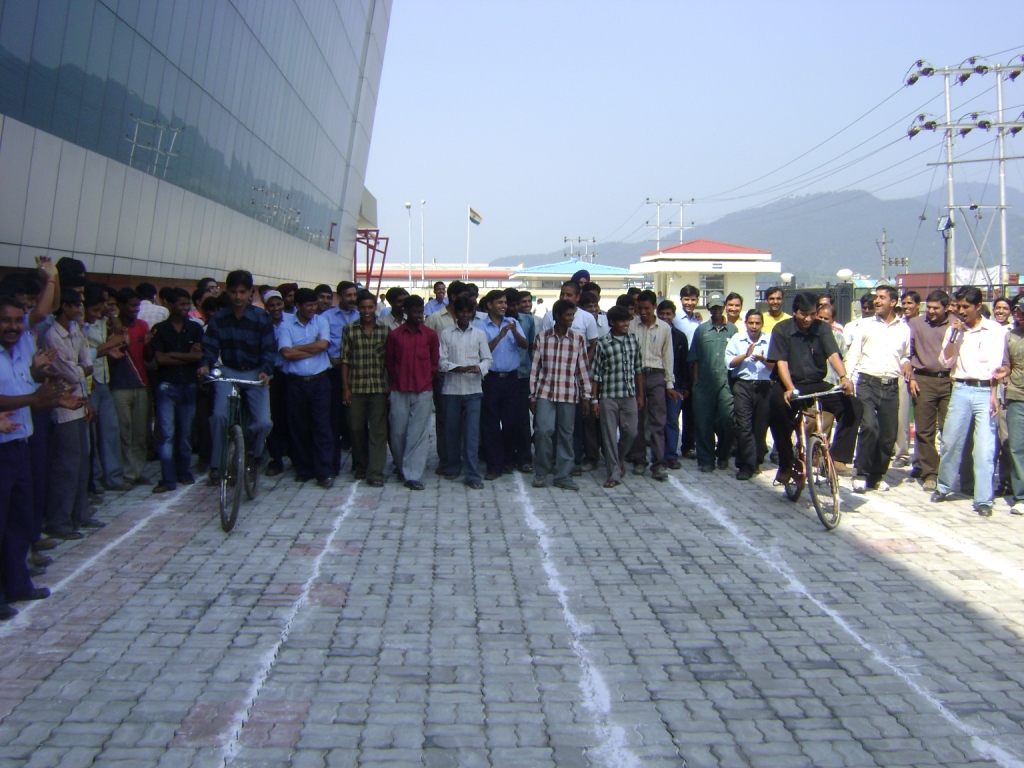
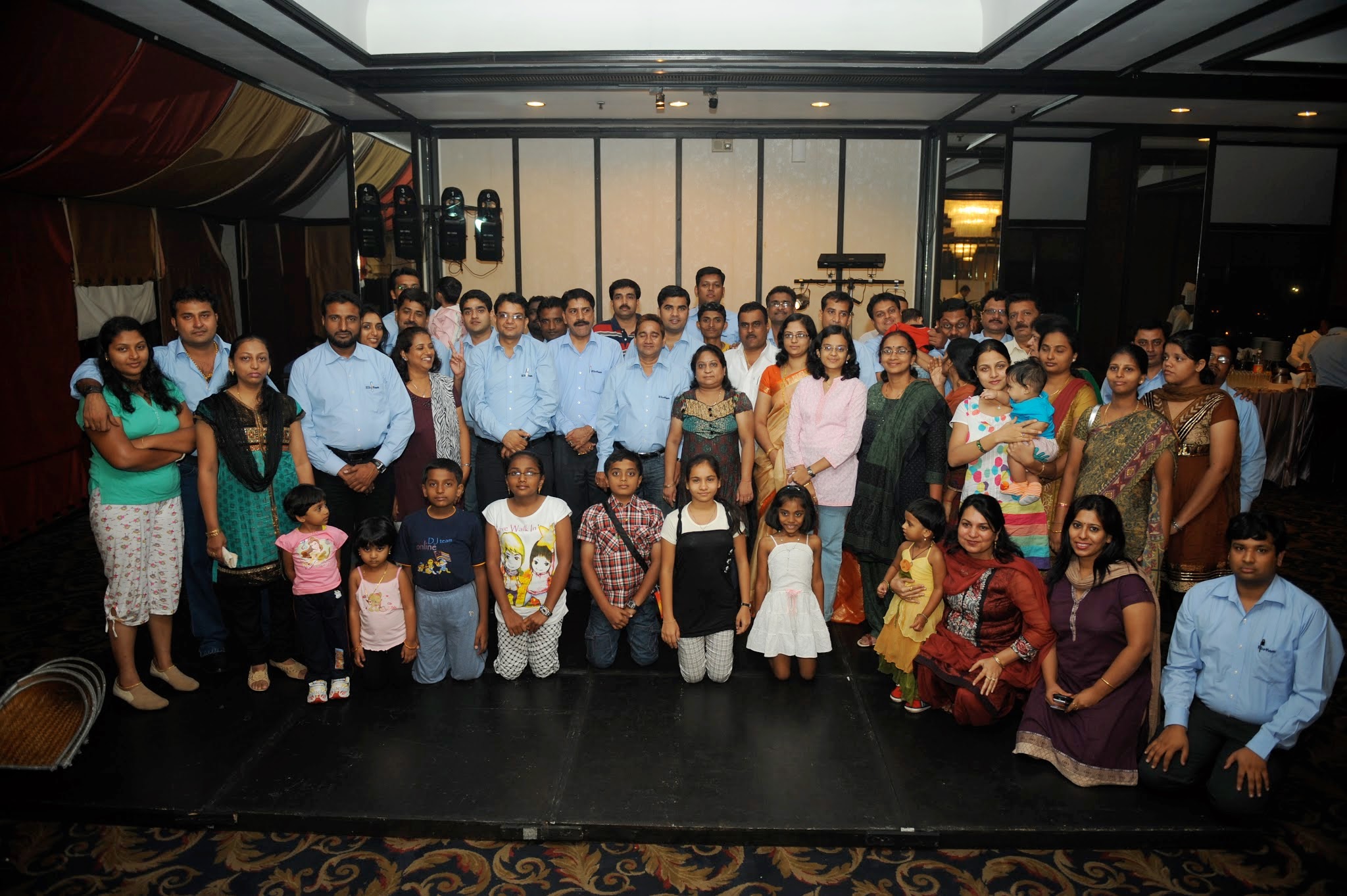
So picture Su-Kam in 2015: revenues still real, brand still loved, products still the best in the category — and simultaneously bleeding senior talent, financing ₹150 crore of government delay, fighting in courtrooms on two fronts, and led by a founder whose every decision could be contested by someone. Any one of these, a strong company survives. It was about to face all of them plus one more: the search for rescue capital.
The deal that never landed
By the mid-2010s Su-Kam needed capital — for the solar scale-up, and to clean up debt that had accumulated while attention was elsewhere. The capital nearly came, and from the biggest name in Indian business.
In fact, big capital had already come in once. In February 2006, at the height of Su-Kam’s rise, the Reliance India Power Fund — a $200-million private equity vehicle of Anil Ambani-led Reliance, set up jointly with Singapore’s Temasek — acquired a 20% stake in Su-Kam for ₹45 crore. It was the fund’s first investment in India, and validation of the loudest kind: of every power company in the country, the Ambani-Temasek fund chose the inverter maker a Delhi entrepreneur had built from a broken machine on his table — a company then doing ₹200 crore in revenue with 4,000 dealers and a 30% share of the organised market. Temasek later exited, and Reliance took full control of the fund — which meant Su-Kam’s largest outside shareholder was now Reliance alone.
With the shareholding came the boardroom. A Reliance-nominated director joined Su-Kam’s board — a board that until then had been a genuinely distinguished one, with independent directors of the stature of Mr Ganguly. What followed, as those of us inside the company experienced it, was not a partnership but a contest for control.
The founder was pressed to step back from the company he had built. At the same time came a push to reshape the board itself — including a proposal to make Kunwer’s own son, Kanav, a director. And here is a detail that tells you everything about the man this chronicle is written around: Kunwer himself refused. His son was in his early twenties, barely started in his career, and Kunwer would not hand a board seat of a distinguished board to anyone — even his own blood — who had not yet earned it. It would have been the easy move, the dynastic move, the move a hundred other Indian promoters have made without blinking. He said no.
The resistance had a price. A forensic audit of the company was commissioned through one of the Big Four firms — and anyone who has lived through one knows what that means in practice. Months of management time redirected from the market to the data room. Every past decision re-litigated. Every vendor payment, every dealer credit, every R&D write-off re-examined by outsiders billing by the hour. For a company already fighting a funding gap and a founder already fighting a personal war, the audit did not open a Pandora’s box so much as it stopped the clock — and Su-Kam had no clock left to spare.
The story of the deal’s final collapse is told in full in its own chronicle chapter, but the short version is this: the investment never came, and with it fell the last realistic path to recapitalising the company from a position of strength.
When the deal died, the ₹240-crore loan default was no longer a problem to be managed. It was a countdown.
The dismantling
The Insolvency and Bankruptcy Code process, once it begins, has its own physics. Su-Kam entered the NCLT process over the defaulted debt, and from that moment the founder was, in every practical sense, a spectator at the dismantling of his own life’s work.
The numbers tell you what kind of process it was. A company whose brand alone had been worth hundreds of crores was eventually sold for ₹49.5 crore during the pandemic. Of that, insolvency process costs consumed the majority — by public accounts, banks ultimately recovered roughly ₹8 crore. Dealers who had built their livelihoods on Su-Kam were stranded. A 20-year-old service network dissolved. The founder himself was pushed into personal insolvency proceedings, ordered to put personal assets on the line for debts the liquidation had failed to cover.
Let that sit for a moment: the man who created India's inverter industry ended the process fighting for his own house — a house he had, in a different sense, already left years before.
The darkest years
This chronicle exists partly because of what came next, and I will not soften it: the years after NCLT were the darkest of Kunwer Sachdev’s life. The depression was real. The silence was real. The chapter Ashes of Su-Kam tells that story properly.
But the reason this post is worth writing — the reason the “what happened to Su-Kam” question has a second act — is what he did with those ashes.
Starting again
Barred by the legal machinery from re-entering Su-Kam, the family started again. Su-vastika Systems was founded in 2019 — this time built around lithium technology, energy storage, and the products Su-Kam never got to make. The patents resumed. The exports resumed. The founder who had every reason to stop, didn’t. That story is told in From Su-Kam to Su-vastika: How Kunwer Sachdev Rebuilt After 2019.
So — what really happened to Su-Kam?
Not a bad product. Not a bad market. Not, whatever the case studies imply, a founder who lost his touch.
What happened was a collision: a private catastrophe that consumed the founder’s attention for the better part of a decade, more than ₹150 crore of state government payments frozen at exactly the moment cash mattered most, a boardroom that fought its founder instead of backing him, a rescue deal that collapsed at the worst possible moment, and an insolvency process that liquidates first and asks questions later. Any one of these, the company survives. All of them together, it didn’t.
The inverters, meanwhile, are still running. In lakhs of Indian homes, in Lagos, in Kathmandu, there are Su-Kam machines humming quietly past their fifteenth year of service. The company died. The work didn’t.
That, more than any tribunal order, is the real record of what happened.
This chronicle is written by a former associate of Kunwer Sachdev, from direct observation and public court records. Personal matters described here are limited to what became part of the public record or was witnessed first-hand; the chronicle does not speak for anyone else’s side of those events.
Related chapters: The Reliance Investment That Did Not Land · Ashes of Su-Kam — Why This Chronicle Was Born · The Accidental Inventor: The Broken Inverter of 1998