
By a former associate of Kunwer Sachdev
I joined Mr Sachdev around 2000. For years after that, I watched him build Su-Kam not only as an engineer and founder but as something rarer in Indian manufacturing — a marketing mind that never waited for an agency brief. He did not have an MBA. He had appetite: for roadside dhabas, for Dal Lake shikaras, for dealer halls where alcohol was banned and education was the only pitch, for Facebook when the rest of India still thought it was a student website, for YouTube when broadband crawled and my own colleagues shrugged.
I envied him. Not in a petty way — in the honest way you envy someone whose brain seems wired to a different frequency. New ideas arrived constantly. In corridor conversations we used to say, half in admiration and half in frustration: why can’t we think like him? He would return from a highway lunch and already be dictating board dimensions to marketing. He would read Philip Kotler at night and test the man’s frameworks against a dealer meet the following week. The brand was not one campaign. It was a hundred small, improbable actions that compounded until Su-Kam felt present in places no inverter company had ever bothered to look.
This is not a case study. It is what I saw from the inside — with links to the longer witness pieces on this site and to the few outside voices who arrived later to name what we already knew.
Philip Kotler — and sharing the dais
The first time I understood that Mr Sachdev’s marketing instincts had crossed from “our eccentric founder” into “the industry notices,” it was not a trophy on the wall. It was a panel list.
On 14 March 2013, RelioQuick hosted a full-day certified training programme with Dr Philip Kotler at The Leela Kempinski, Gurgaon — Eight ways to grow your market share: The Future of Marketing. The afternoon session, moderated by Shweta Rajpal Kohli of NDTV Profit, asked a question that would have sounded absurd about Su-Kam a decade earlier: Is the CMO the next CEO? On that dais sat Kotler himself, alongside CMOs and joint MDs from Havells, Canon, Yum! Restaurants, Xerox India — and Kunwer Sachdev, listed as MD & CMO of Su-Kam.
I was not in that ballroom. But I remember the ripple in the office when the invitation came back confirmed. Everyone called him Sir; in the marketing department the mood was closer to disbelief. A cable-TV-turned-inverter company from Gurgaon, sharing a stage with the man who wrote the textbook?
Sir had been reading Kotler for years by then — not as decoration, as operating manual. He wrote about Kotler’s ideas in his own essays on what it meant to be selected among India’s marketing practitioners, connecting classroom theory to what he had already done on the Grand Trunk Road. NDTV later archived the panel discussion as Is the chief marketing officer the next CEO? — Kotler, Sachdev, Gupta, Kataria, Bhardwaj and Jain in one frame. RelioQuick’s event page remains a primary source for the 14 March 2013 Gurgaon programme and panel roster.
What struck me then — and strikes me harder in hindsight — is that Sir did not treat Kotler as a celebrity photo-op. He treated him as validation of a method he had already lived: understand the customer, build trust before the hard sell, make the dealer network an extension of the company’s values. The dealer meets we had been running for years were, in Kotler’s language, relationship marketing long before the phrase circulated in our industry.
Shikaras on Dal Lake — and boards on dhabas
If Kotler was the theory exam, Kashmir and the highways were the fieldwork.
On the trip to Srinagar that became the Kashmir Shikara branding project, Sir stepped off the car at Dal Lake and did not see only tourism. He saw weathered boats and tired owners. Within days the marketing team was sourcing weather-resistant covers — each bearing the Su-Kam logo, each protecting a livelihood. Tourists photographed them; competitors copied them. It was goodwill and visibility in a single stroke — the kind of idea that looks obvious only after someone with nerve has already paid for the first hundred covers.

The dhaba boards were the same instinct on asphalt. Sir preferred roadside eateries to hotel restaurants; on one Ambala stop he looked at the blank fascia above a dhaba and said, simply, why not put Su-Kam boards here? — with the eatery’s own name printed below so the owner had pride in the sign. The marketing head on that trip received immediate orders. Many of us thought it was a waste of budget. Sir scaled it until Su-Kam was a familiar sight on India’s highways at a fraction of the cost of television. The full story is in The Dhaba Visionary.
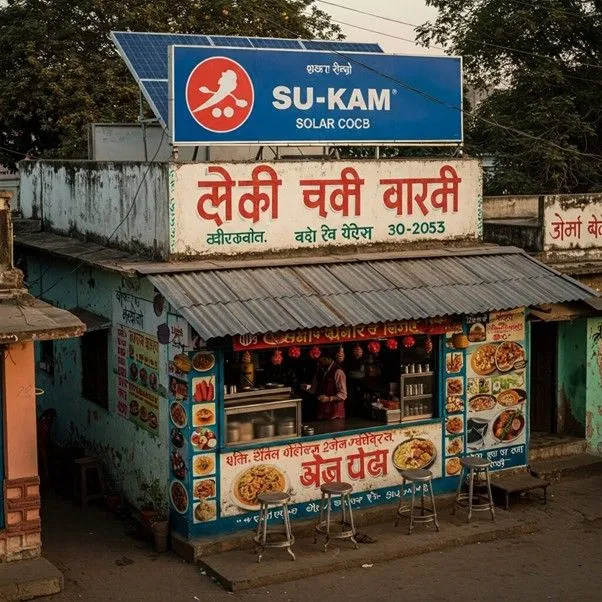
Porus Munshi, when he came to write Making Breakthrough Innovation Happen, noticed exactly this guerrilla layer — dhaba banners, classified-column lettering — alongside the engineering firsts. See when Porus Munshi came to discover the man behind Su-Kam. We saw a lunch stop; he saw media inventory. The marketing head on the highway trips learned to stop arguing and start measuring — Sir’s instinct was right often enough that dissent felt like career risk.
Marketing teams and dealer meets
Sir did not “do marketing” alone. He built marketing teams the way he built R&D — by hiring people who could be embarrassed into learning on the job, then giving them impossible briefs and standing in the room when they delivered. If a campaign failed, the room knew it before the quarter closed; Sir remembered every missed detail and would return to it weeks later without raising his voice.
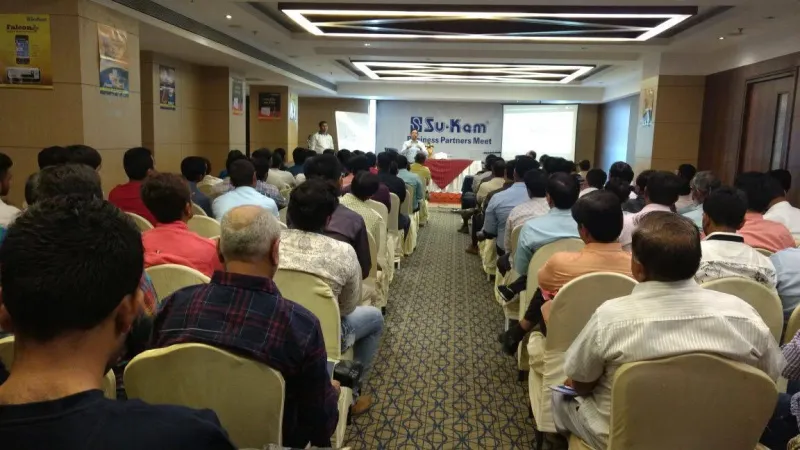
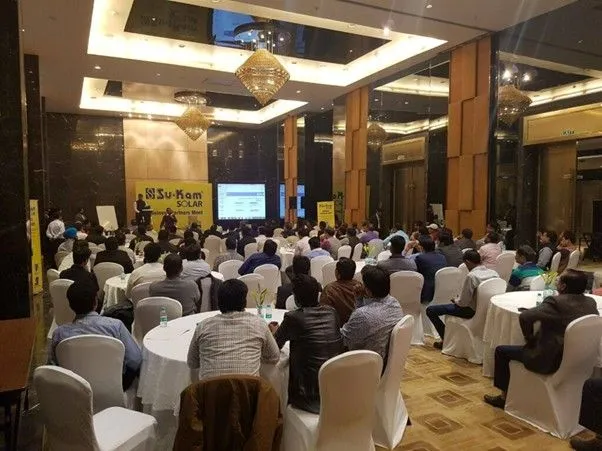
The dealer meets were the cathedral. No alcohol. No pressure orders. Live demonstrations, Sir’s own slides, pin-drop silence when he explained sinewave versus square wave. I sat in the back at Ranchi and elsewhere watching distributors leave convinced — not bullied — that Su-Kam was setting the benchmark. When a Ranchi dealer was stranded with excess stock pushed by a rep, Sir ordered a full buyback on the spot, then brought the man to Delhi for training until he became one of the region’s best. That was marketing too — trust as currency.
The same theatre extended to road shows. Power on Wheels — a 100 kVA inverter on a truck touring India — looked insane on a whiteboard and inevitable once dealers saw it breathe. Sales Ka Baazigar turned the sales force into prime-time television. I did not believe either idea at first. Sir did. That gap — between our skepticism and his execution — was where the envy lived.
YouTube and Facebook — a decade early
In 2006, when Facebook had only just opened beyond college campuses, Sir gathered a few of us in his office, pulled up the site, and said this is the future. He created Su-Kam’s official page, ran training sessions so employees built profiles, and turned the platform into a digital family album — factory photos, dealer installations, launch celebrations. By the time competitors noticed social media, Su-Kam already had a community. The witness account is how Mr Sachdev transformed Su-Kam through Facebook.

YouTube followed in 2009. Sir mandated an education channel when most of us still thought the site was for amateur clips. The @sukam channel became India’s first inverter-and-solar company on YouTube — product explainers, factory tours, installations in Sir’s voice. Luminous, V-Guard and others arrived years later. Read the first YouTube channel in India’s solar industry.
Sir, in his own words, on why the YouTube channel existed — education, not advertising.
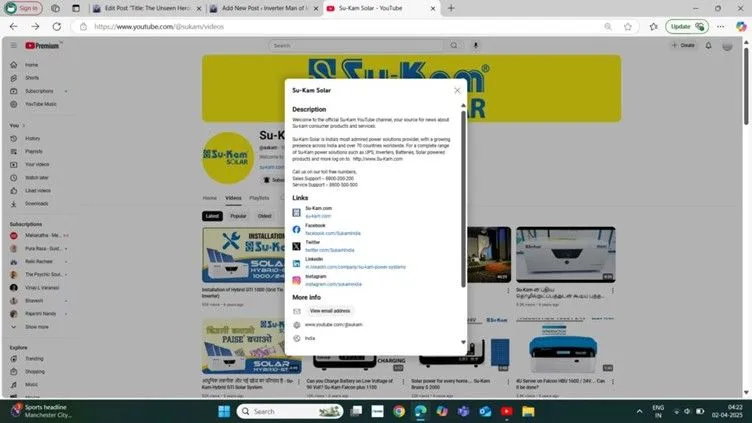
The timing still stings a little in hindsight. We were still printing brochures; Sir was building libraries that worked while people slept — and the rest of us were the ones staying late to upload them.
What others said — Porus, Harsh, India Today, and the outsiders
Inside Su-Kam, the marketing genius label felt informal — something dealers said, something the sales team muttered after another impossible launch. Outside, the witnesses stacked up.
Porus Munshi put Su-Kam in Making Breakthrough Innovation Happen, pairing engineering disruption with the dhaba-and-shikara instinct. Harsh Pamnani came looking for booming brands and left naming Sir as the heartbeat in Booming Brands. India Today put Su-Kam on the cover in December 2008 under The Power Economy — press recognition, not a marketing award, but proof the national room had started listening. See awards and recognition of Kunwer Sachdev for the India Today covers and the wider trophy record.
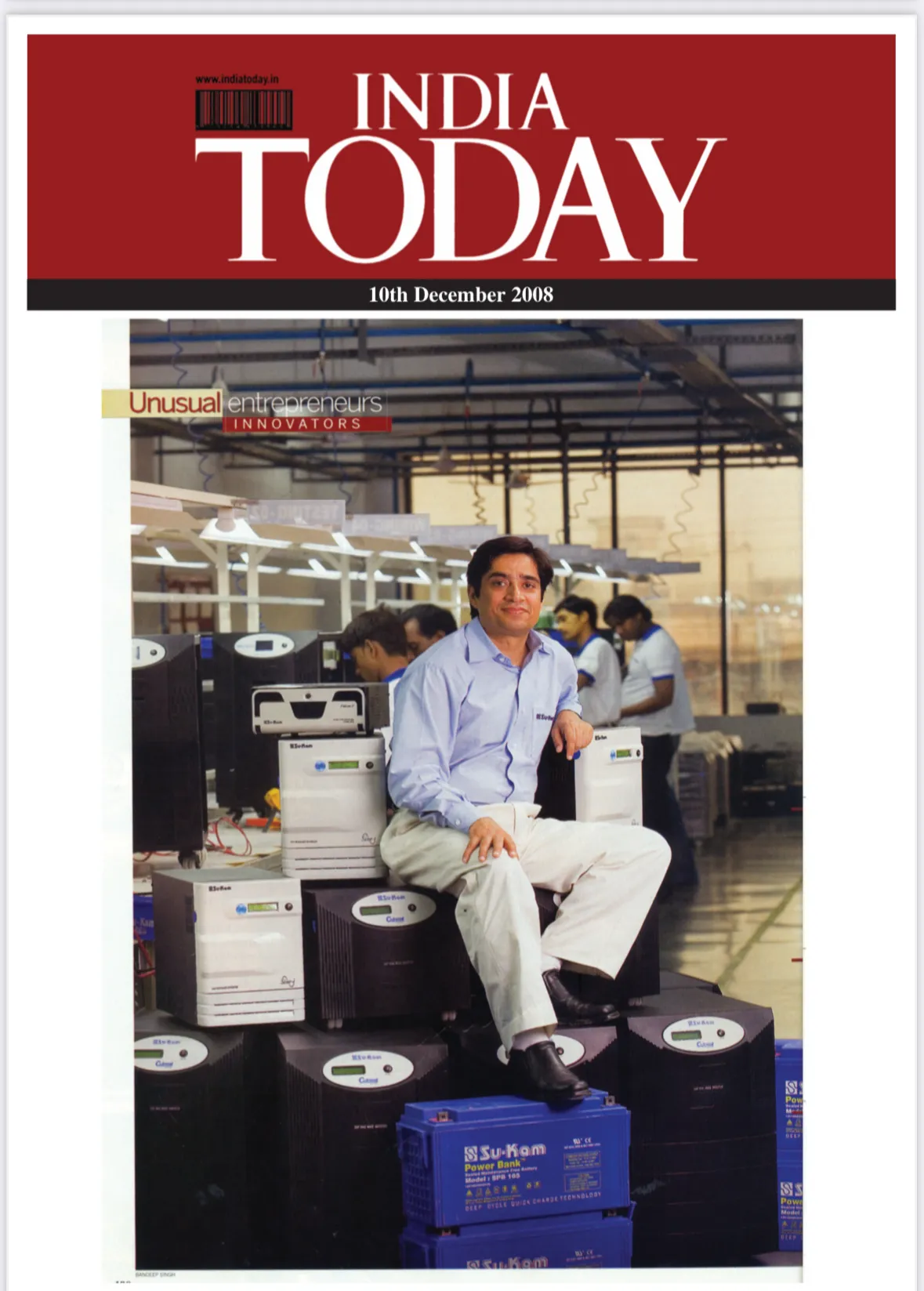
For background beyond what we lived in the dealer halls, the public record on Kunwer Sachdev, Su-Kam Power Systems, and Philip Kotler fills in dates and titles the office never posted on a wall.
Why I still call him a marketing genius
Genius is an overused word. I use it here with restraint and evidence.
Sir built a brand without the biggest budget by stacking unrepeatable relationships — dealer meets that taught instead of pressured, dhaba boards that owners kept because their names sat underneath, shikara covers that helped boatmen before they advertised, digital channels a decade early, a Kotler panel that placed an inverter founder among India’s CMO elite. He filed patents and won engineering awards, yes — but the reason Su-Kam became a household name in North India was that he understood where Indians actually look when they are not in a showroom.
I envied him. I still do, a little. Not for the dais with Kotler — for the daily habit of seeing media where the rest of us saw only commute and lunch. Why can’t we think like him? was never an insult. It was the honest admission that his marketing brain was the moat no competitor could photocopy.
By a former associate of Kunwer Sachdev
Editorial Note · Independent Coverage
This article is part of an independent editorial series on invertermanofindia.com. It is written by a former associate of Kunwer Sachdev, drawing on first-hand observation during the period described and the dealer-meet culture, early Facebook and YouTube bets, and external witness accounts cited above. It is not authored, ghost-written, edited or approved by Mr. Kunwer Sachdev, by Su-Kam Power Systems Ltd. as the company exists today, or by any current entity he leads. The views, framing and interpretations are the writer's alone. Full independence and dissociation policy: /disclaimer.
Disclaimer: invertermanofindia.com is an independent editorial legacy site.