Some days, the historic nature of a moment only becomes clear much later.
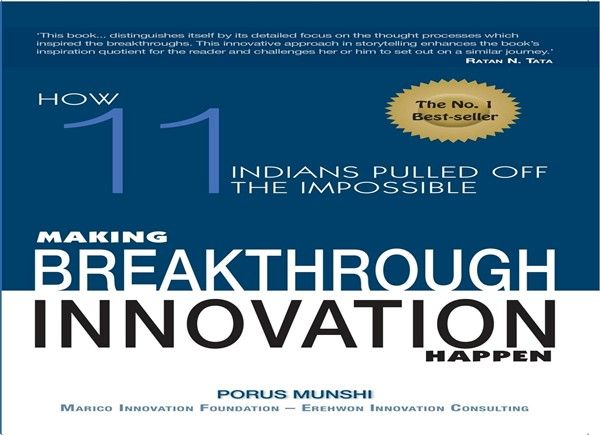
One such day came years ago, when Porus Munshi — a respected author and consultant known for uncovering India’s most game-changing innovations — walked through the doors of the Su-Kam office. At the time, no one knew his visit would result in one of the most powerful chapters in his landmark book, Making Breakthrough Innovation Happen, written about the company’s founder, Mr. Kunwer Sachdev.
Porus wasn’t just there to collect data. He was there to understand the heart of the company, and the soul of the man behind it — and the employees, engineers and team heads had the privilege of watching the story unfold from within.
To those who worked closely under Kunwer Sachdev, the grind, the grit, the sleepless nights and the quiet sacrifices of building Su-Kam were familiar. But hearing Porus ask deep, thoughtful questions — not only of the founder, but of everyone — prompted a deeper reflection: this wasn’t just a company; it was a revolution that began with one man’s restlessness.
Porus was fascinated — not just by the scale of the company, but by how it was built. Su-Kam wasn’t born in a lab or a corporate high-rise. It began in a small workshop, led by a man who didn’t come from the energy sector, didn’t have a business degree, and yet had the mind of a scientist and the heart of a warrior.
His question was simple: what made Kunwer Sachdev different? The answers came easily from the team — he never stops thinking; he calls at night with an idea that can’t wait; he asks the questions no one else dares to ask; he believes the team can make anything if they just try.
The chapter that eventually appeared in the book was a masterful reflection of what the team saw every day. It captured how Su-Kam, under Kunwer Sachdev’s leadership, disrupted an entire industry — creating world-class power solutions from scratch in a country that was still importing low-quality alternatives. The real breakthrough wasn’t only the products; it was the thinking behind them. He didn’t believe in incremental change, but in radical possibility: experimentation was encouraged, mistakes were tolerated, and innovation was treated not as a department but as a way of life.
What the Book Documented
The chapter traced how Su-Kam came to be. It began around 1997 with little more than an idea and roughly ₹10,000 in capital. Kunwer Sachdev — then in the cable-TV electronics business — bought an inverter for his home, found it so unreliable that a service technician seemed to visit every other day, and opened it up to see what was wrong. What he saw convinced him the entire product was built the wrong way, and that there was a vast opportunity hiding in plain sight: in a power-starved country, nearly every household was a potential customer, and inverters imported from the West could not cope with India’s erratic voltages. Larger electrical and consumer-durable companies, the book notes, simply never spotted it.
Rather than meet demand at the lowest common denominator, he set out to drive the industry through technology — assembling an unusually eclectic team drawn from the UPS, automobile, digital-product and even missile industries (including engineers from a wound-up programme that had built components for the Agni missile). What followed was wave after wave of innovation: India’s first MOSFET-based inverter in 1998, which cut the device to a quarter of its size and let it run on one battery instead of two; the first sine-wave inverter in 2001, developed and stress-tested in the punishing power conditions of Meerut and Kanpur; the world’s first plastic-body inverter in 2002, engineered with GE Plastics to survive temperatures that melted ordinary materials; and, in 2003, the first “Home UPS,” merging the inverter and the UPS into a single device with hours of clean backup and near-instant switchover.
The book also captured his instinct for guerrilla marketing — Su-Kam banners on highway dhabas, with each dhaba’s own name added so the owner had a reason to keep them up, and giant “Su-Kam” lettering assembled out of cheap classified columns — and a DSIR-certified R&D unit built on a philosophy of deliberately making its own products obsolete before rivals could catch up. As Kunwer Sachdev summed up his guiding principle in the book: “change the market before it changes you.” Munshi’s conclusion was that Su-Kam had done something rare — it had built not merely a business, but an entire industry.
Years have passed since that interview. Porus Munshi has gone on to inspire many with his writing, and Kunwer Sachdev, true to form, continues to innovate — now with AI, clean tech and youth empowerment through new ventures such as kunwwer.ai. But the message of that chapter remains as fresh as ever: in a world chasing shortcuts, it is a reminder of what it truly takes to build something lasting — clarity, courage, and a constant thirst to do better.
Further Reading
Read the full account in Porus Munshi's Making Breakthrough Innovation Happen: How 11 Indians Pulled Off the Impossible (also summarised by the Marico Innovation Foundation). The recognition is noted on Kunwer Sachdev's Wikipedia profile, and more of his story is documented across SolarManOfIndia.com. Related on this site: Su-Kam was also profiled in Harsh Pamnani's Booming Brands.
Disclaimer
Mr. Kunwer Sachdev, the original founder and visionary behind Su-Kam, is no longer associated with Su-Kam Power Systems Ltd. He has not been involved in the management, operations, or decision-making of the company for several years. Any products, services, communications, or representations made under the Su-Kam name have no connection to Mr. Kunwer Sachdev. His current efforts are entirely focused on new innovations and ventures under different entities, including his latest initiative, Su-vastika, which is redefining the energy storage and power backup industry.