The Man Who Built Empires Through People
This is not a story about advantage. It is a story about creation.
With mind and hard work, Kunwer Sachdev built Su-Kam into something India did not yet have: a recognisable power-electronics brand, a range of products ordinary homes and export markets could trust, a stack of patents filed for Indian engineering, and a culture of training that produced people who could carry the work forward. Those creations did not stay inside one company. They became the floor under a ₹5000+ crore inverter, solar battery, and power-backup industry—and they continue in the companies, products, and patents that followed.
His name is Kunwer Sachdev. From a garage start in 1998, Su-Kam grew into a ₹200+ crore export engine across 90+ countries—the arc told in Kunwer Sachdev’s export pioneer story and in how he planned to make Su-Kam an international name. If you have bought an inverter or home power-backup system in India, there is a good chance you are living with technology that lineage made ordinary. The fuller archive of what he built sits on SolarManOfIndia.com and kunwersachdev.com. The longer institutional chapter continues in The Complete Story.
Building the Road Others Would Walk
Creation began with products.
In the late 1990s, Indian inverters were crude metal boxes. Kunwer drove Su-Kam to build India’s first major MOSFET-based inverter—inverter and charger on one board when the market still ran on older transistor designs. A 500W load that once needed two batteries could run on one. That chapter is in First Inverter Designing Challenges in India by Su-Kam and in Porus Munshi’s Making Breakthrough Innovation Happen.
Then he created clean power as a product line. Square-wave machines damaged sensitive electronics. Su-Kam moved through microcontroller platforms (Microchip’s 16F72 and beyond) into pure sinewave, field-tested in hard grids like Meerut and Agra until the product held. That range changed Indian homes and made Indian inverters exportable. See The Legacy of Clean Power.
He also created a brand people could recognise. Plastic-body, design-led home inverters replaced industrial boxes and made backup power a consumer product. India Today later called Su-Kam’s CHIC inverter an “Innovation of the Decade” and named Kunwer “The Solar Man of India” in coverage preserved on SolarManOfIndia and summarised in Awards and Recognition of Kunwer Sachdev.
Under the brand sat patents—creations of the mind on paper for India. Across Su-Kam and later ventures: 106+ technology filings—MOSFET sine-wave architectures, hybrid solar PCUs with patented MPPT controllers, lithium storage ideas—still visible on Google Patents, WIPO, and the Indian Patent Office.
Millions went into R&D until the catalogue and the brand could travel. By around 2012, Su-Kam had crossed ₹200 crore in international sales across 90+ countries. That is what was created.

The Trained Leaders Behind a ₹5000+ Crore Industry
Training was part of what he created—not as a slogan, but as people who could run product, export, and technology at the same standard.
Venkat Rajaraman: From Su-Kam to 4.8 GWh
Venkat Rajaraman was Su-Kam’s CEO—ex-Nvidia VP, Stanford MS. As founder of Cygni Energy, he is now building a 4.8 GWh lithium battery plant, among India’s largest. The manufacturing ambition continues the same product seriousness Su-Kam practised.
Jagdeep Chauhan: EAPRO Global
Jagdeep Chauhan joined during the sinewave product push from the semiconductor world. EAPRO Global now runs export operations across Africa and the Middle East—markets Su-Kam products and relationships helped open.
Dhananjay Sharma & Sanjeev Saini: Invergy
Dhananjay Sharma ran exports. Sanjeev Saini ran technology through the microcontroller and sinewave years. Together they founded Invergy, carrying forward a product-and-export discipline built inside Su-Kam.
Ravi Dutt & Team: Smarten
Ravi Dutt and Smarten continue IoT-enabled power products—another branch of the same insistence that Indian power electronics be built as a real product range, not a compromise.
Mentorship as Infrastructure
What Su-Kam created around people was a working culture: design products that survive bad grids, file the IP, meet export certifications, treat foreign buyers as real customers, and teach the next engineer to do the same.

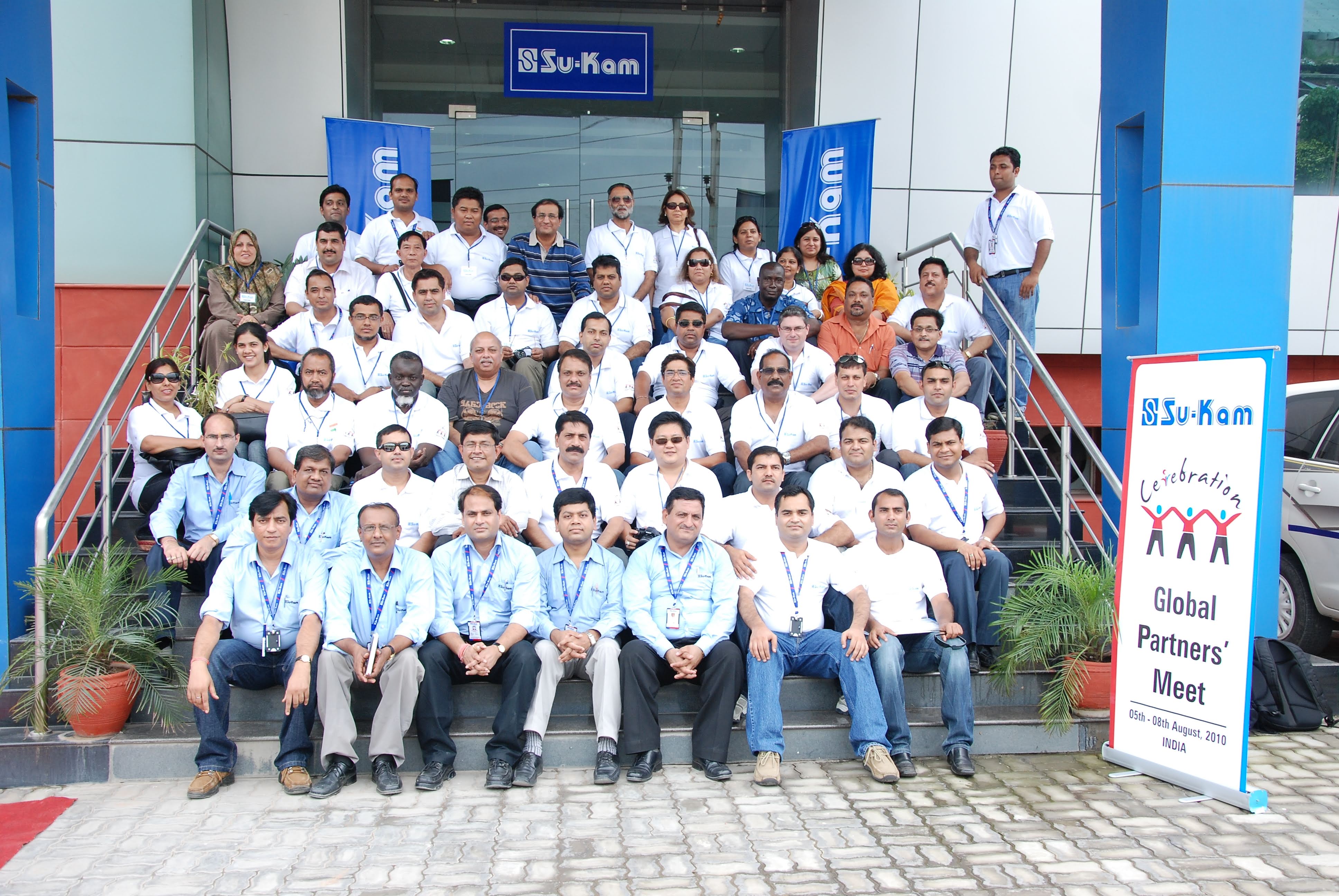
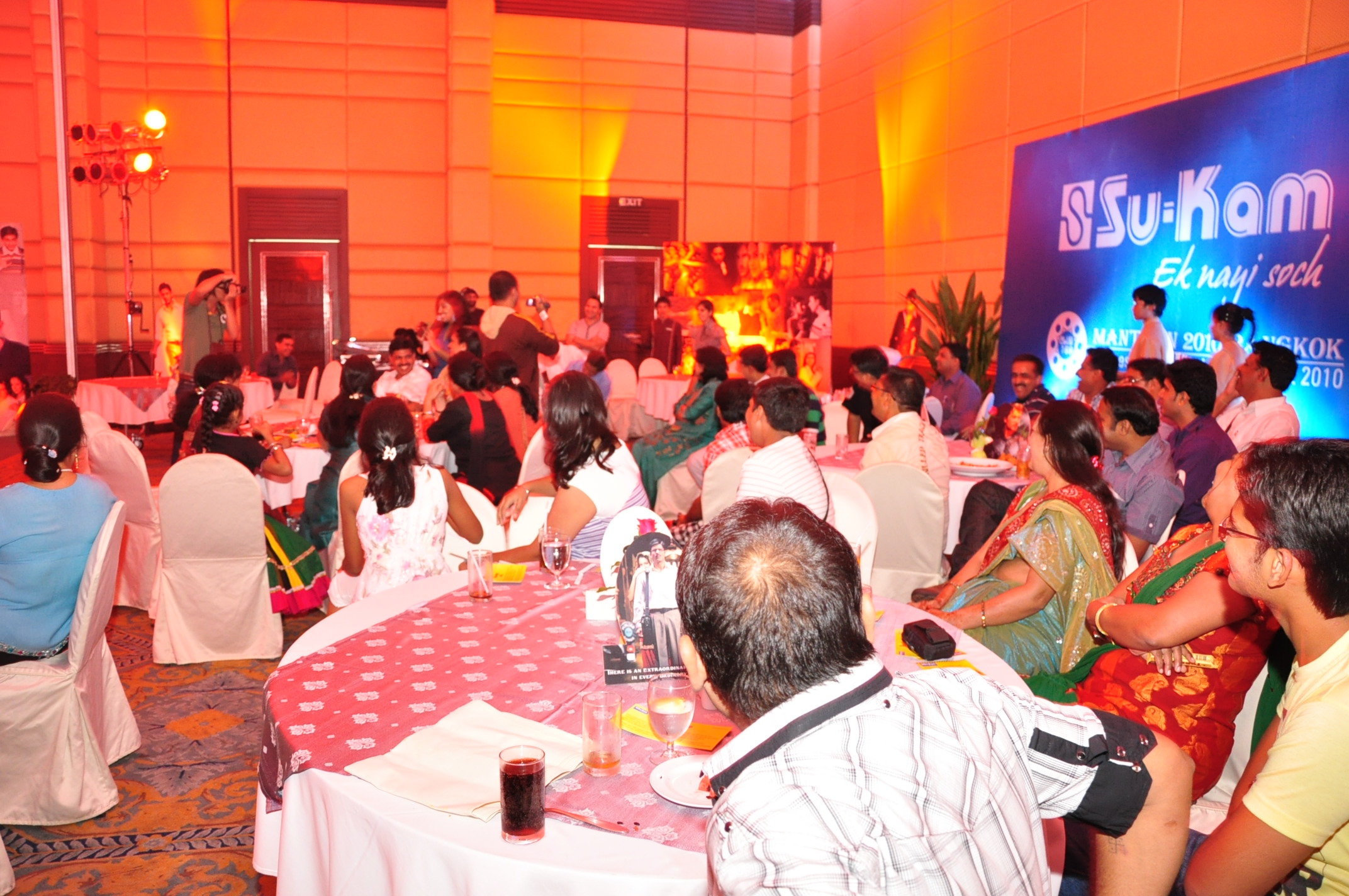
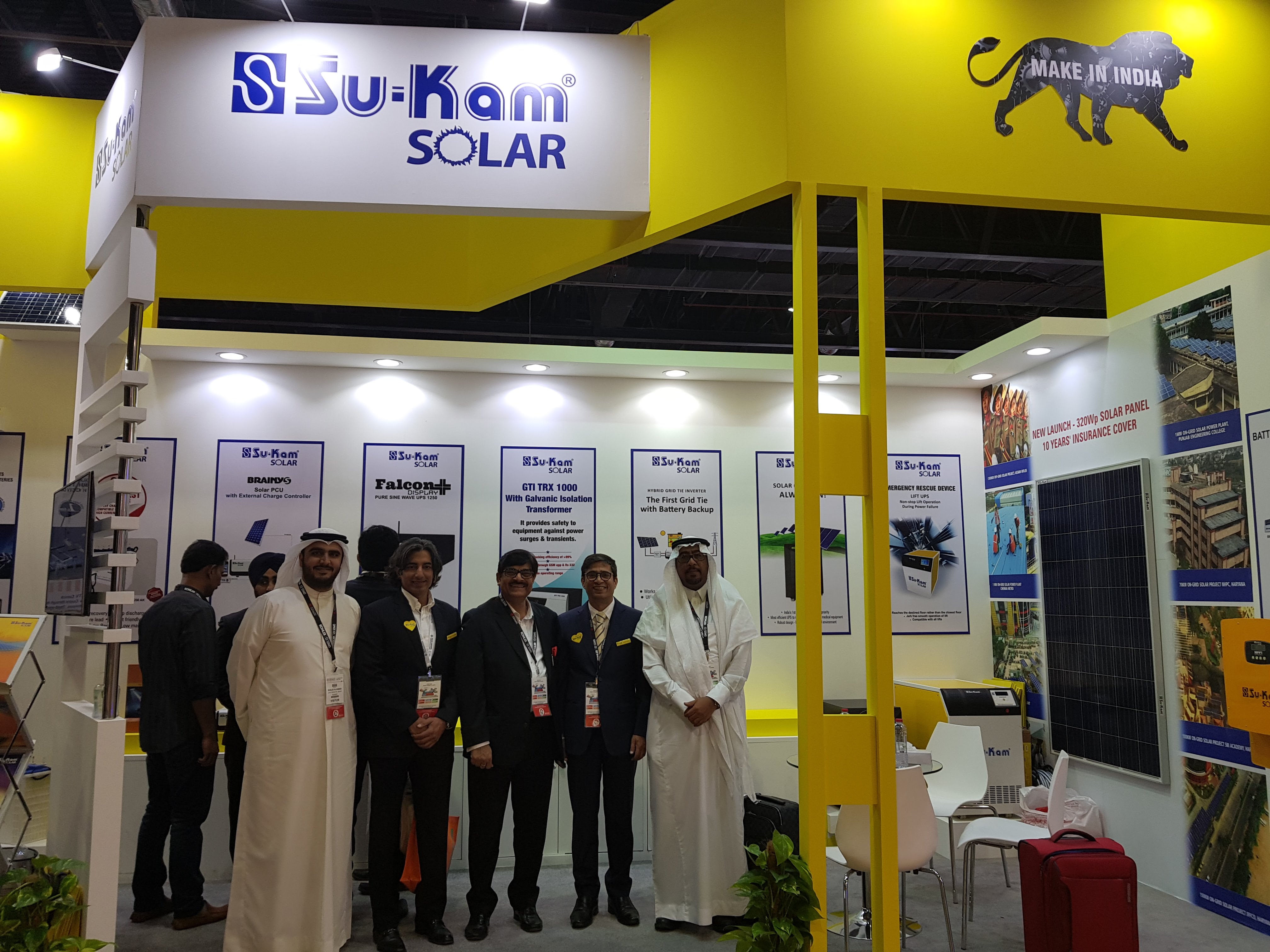
The photographs from Su-Kam’s strongest years still show that creation in motion:
- Engineers, operators, managers, and support staff building and shipping a product range together
- Partners from Nigeria to the UAE to South Asia standing with the brand
- Exhibition floors where “Made in India” was presented as quality, not apology
- Training that assumed India could invent and export, not only assemble
Brand, products, patents, and training were one system. That is what continues.
The Markets He Opened Are Now Standard
Export markets were not a side project. They were proof that the brand and product range belonged on the world stage.
Nigeria and West Africa. Kunwer invested in products that survived African climate and load conditions, cleared SONCAP, and built the Chief Adeje relationship that became a major West African channel. Nigeria became one of Su-Kam’s largest overseas markets. The account is in Kunwer Sachdev: The Pioneer Who Proved Indian Hardware Could Dominate Global Markets.
South Africa. To put the brand into a European-loyal market, Su-Kam earned UL and CE certifications and entered on product merit.
Afghanistan. He flew to Kabul, assessed requirements on the ground, and secured a major export order—product and presence, not remote pitching.
China. He exhibited twice with standalone, high-visibility booths, flying the Indian flag where competitors lived—selling Su-Kam as an Indian engineering brand. That contrarian market push is also told in The China Bite and the Markets Nobody Was Looking At.
Middle East and Gulf. Su-Kam Dubai anchored UAE, Saudi Arabia, Kuwait, Qatar, Bahrain, and Oman.
Beyond. Partners and projects across Bangladesh, East Africa, and Southeast Asia. The SolarManOfIndia archive documents solar DC systems in rural Uttar Pradesh, school power in Rwanda, street lighting in Gabon, residential solar in Namibia—products installed, not only promised.
Those markets still operate. The brand and product language Su-Kam created made them possible.
The Numbers Behind the Ecosystem
What his mind and hard work created:
- A national inverter brand households recognised
- A product range: MOSFET, microcontroller, DSP sinewave, plastic-body consumer design, hybrid solar PCUs
- 106+ patents filed for Indian power-electronics and storage ideas
- Training that produced operators who still build in the category
- ₹200+ crore export scale and 90+ countries of footprint by the early 2010s
- A documented trail in 680+ posts on SolarManOfIndia.com
What continues because of that creation:
- Venkat Rajaraman — Cygni: 4.8 GWh, ₹500+ crore trajectory
- Jagdeep Chauhan — EAPRO: multi-country export operations
- Dhananjay Sharma & Sanjeev Saini — Invergy: ₹100+ crore operations
- Ravi Dutt — Smarten: IoT-enabled power products
- A ₹5000+ crore inverter, solar battery, and power-backup ecosystem India now treats as normal
If those creations—brand, products, patents, training, export pathways—had not been built, this export industry would not stand where it stands.
What Continues Because He Created It
The point is not who arrived first. The point is what still exists because he built it.
The brand taught India that home power backup could be designed, trusted, and exported. The product range set the technical language—sinewave, MOSFET, hybrid solar, consumer form factor—that the category still speaks. The patents put Indian engineering into the formal record. The training put capable people into factories, export desks, and later their own companies. The markets he opened still buy Indian power electronics.
Venkat, Jagdeep, Invergy, and Smarten are continuations of that creation—not proofs of a race won, but proofs that what he made with mind and hard work kept growing after the original company chapter closed.
The Mind Cannot Be Liquidated
A company’s assets can change hands. A creator’s mind keeps working.
After Su-Kam, Kunwer still holds 106+ technology filings across power electronics, lithium systems, AI-driven energy ideas, and advanced inverter architectures. Through Su-Vastika Systems and Kunwwer.ai, he continues filing patents at nearly two a month—the same habit of creating IP for India that once made Su-Kam’s product range exportable. That second chapter is told in From Su-Kam to Su-vastika.
Google Patents, WIPO, and the Indian Patent Office hold the paper trail. SolarManOfIndia.com holds the field record. kunwersachdev.com holds the continuing public story.
Companies change. Creation compounds.
Going Forward
Through Su-Vastika, Kunwwer.ai, and ongoing patents, he is still creating tools the next decade of power electronics will use—including lithium storage shipped into dozens of countries.
What this article holds onto is simpler: he created a brand, a product range, patents for India, training that produced builders, and export pathways that still run. The industry that followed is the continuation of that work.
If Kunwer Sachdev had not selected and trained them, this export industry did not exist.
Today those leaders—and the wider category—stand on what his mind and hard work created.
That is the real measure of a pioneer.
Further Reading
- Kunwer Sachdev: The Pioneer Who Proved Indian Hardware Could Dominate Global Markets — Nigeria, South Africa, Afghanistan, China, and the ₹200 crore export build
- Kunwer Sachdev Plans to Make Su-Kam an International Name — the international-brand ambition
- The China Bite and the Markets Nobody Was Looking At — hard markets others skipped
- First Inverter Designing Challenges in India by Su-Kam — MOSFET inverter creation
- The Legacy of Clean Power: Pure Sinewave — the product range that made exports credible
- Awards and Recognition of Kunwer Sachdev — Innovation of the Decade and press record
- From Su-Kam to Su-vastika — patents and product creation after Su-Kam
- The Complete Story: Empire, NCLT Discharge, and Ongoing Cases — the fuller institutional narrative