
By a former associate of Kunwer Sachdev
I joined Mr Sachdev around 2000, when Su-Kam was still small enough that you could walk from the founder’s cabin to the R&D bench in under a minute. In those years I learned how Indian business actually works in the rooms nobody photographs: the promoter who seats his brother-in-law beside the CFO, the uncle who signs off on capex he does not understand, the son who inherits a directorship before he has finished his MBA. It is not always corruption. Often it is habit — the assumption that a company built by one family ought to be governed by that family.
Mr Sachdev did something else. While most founders filled boardrooms with relatives and school friends who would nod at whatever the chairman wanted, he went looking for people who had already run larger, harder companies — and who would tell him when he was wrong. I did not fully grasp the radicalism of that choice until much later, when I watched the same man refuse a board seat for his own son under pressure that would have broken most promoters. But even in the early 2000s the signal was visible: Su-Kam was being built as an institution, not a dynasty.
The names that eventually sat at his table — S. B. Ganguly of Exide, Biplab Majumdar of ABB India — were not decorative. They were leaders whose careers spanned decades of Indian industrial history. I was rarely invited inside those board sessions; juniors like me learned about governance from the hallway — the longer silences after Sir returned, the sudden seriousness around internal audit, the way a question that would have been waved away in a family board now had to survive scrutiny from men who had run balance sheets ten times Su-Kam’s size.
Building an institution, not a dynasty
The conscious choice against nepotism at Su-Kam was not announced on a banner. It was lived in small refusals that accumulated until they became culture.
Sir had children. He was proud of them in the ordinary way a father is proud. What he did not do was hand them authority they had not earned. His son Kanav was never placed on the Su-Kam board while the company was under Sir’s governance philosophy. Years later, when outside shareholders pushed to reshape the board, a proposal surfaced to make Kanav a director. Sir refused. His son was in his early twenties, barely started in his career, and Sir would not give a seat on a distinguished board to anyone — including his own blood — who had not yet proved he could carry it. That was the easy move in Indian family business. He said no.
The refusal was consistent with everything else he had been building since I joined: a company where merit was supposed to matter more than surname, where a talented engineer from a small town could rise because Sir had watched him think on a talent show, not because he shared a last name with the chairman.
Dealers would sometimes ask, half-joking, whether Su-Kam was “a family company.” The honest answer was yes in emotion — Sir’s fingerprints were everywhere — and no in structure. Nepotism was not forbidden by policy memo. It was forbidden by example. When board seats were discussed, the room looked for stature and independence. Family members who worked in the business did so as employees, not as crown princes.
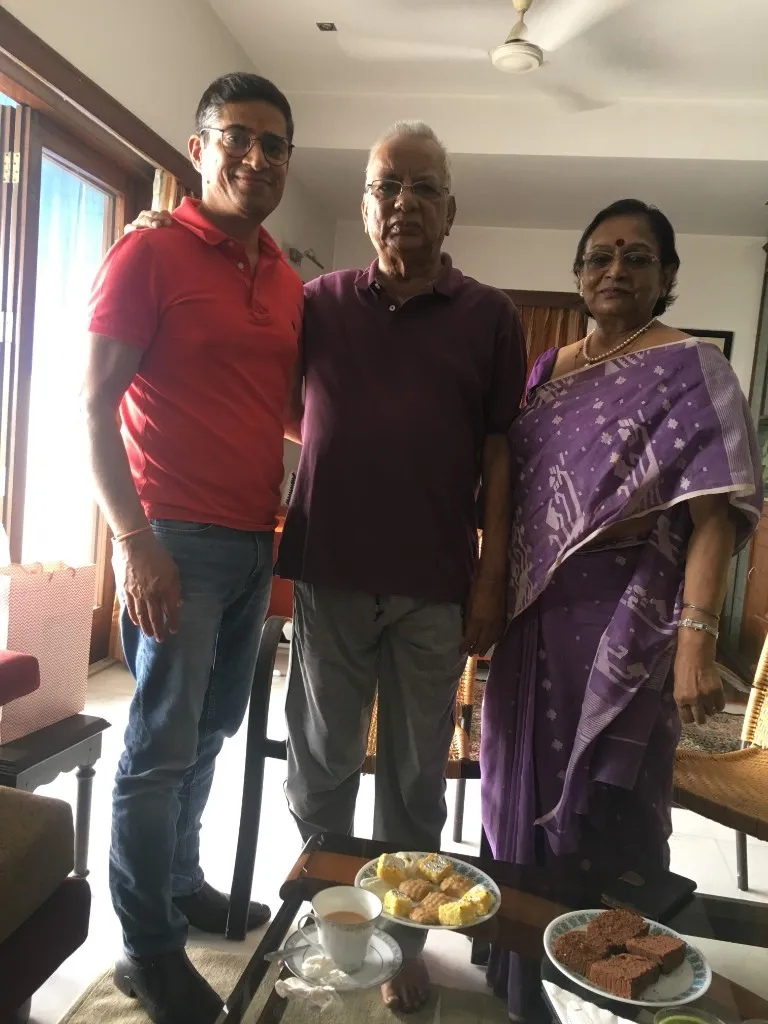
At home — warmth in private life, separate from who sat on the board.
That choice signalled something to the people inside the building. It told the R&D team that invention could outrank inheritance. It told people like me — young, anxious, watching how power moved — that Su-Kam was attempting something harder than growth: permanence. A dynasty survives on blood. An institution survives on rules that outlive the founder’s mood.
I admired it. I also felt the cost at close range. Governance that refuses shortcuts is slower. Decisions that must survive a serious board take longer than decisions made over dinner. Sir’s patience for process could frustrate people who wanted to move at founder speed. I was among them sometimes. I wanted confirmation now; he wanted the record clean. I understand now why he wanted the record clean — and I still remember how it felt when a good idea waited three weeks for a meeting that could have been a ten-minute yes in a smaller room.
The board he built
When Sir set out to strengthen Su-Kam’s governance, he did not assemble a board of friends and yes-men — the default failure mode of the founder-led company. He went after stature.
Two additions were decisive.
Mr S. B. Ganguly — former chairman of Exide Industries, the largest battery company in the country. Su-Kam’s products lived in the same electrical ecosystem Exide had defined for generations. To put Ganguly on the board was to invite the most informed scrutiny imaginable from the category Su-Kam both depended on and would later compete in.
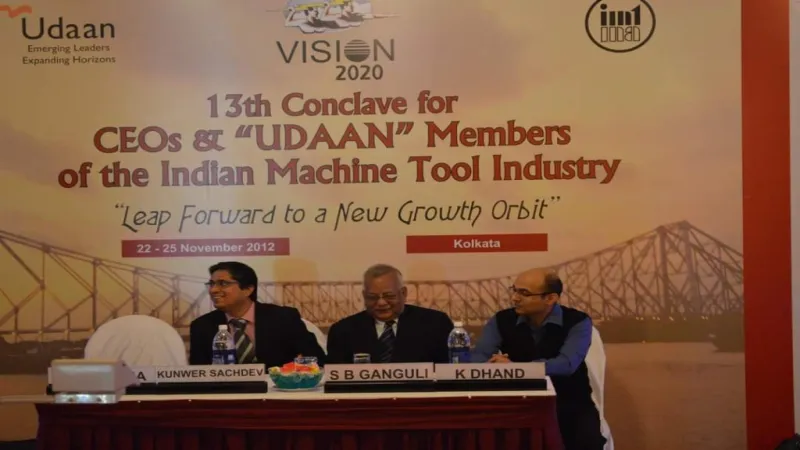
Kunwer Sachdev with S B Ganguli at the 13th Conclave for CEOs, Indian Machine Tool Industry, Kolkata, November 2012.
Mr Biplab Majumdar — managing director and chairman of ABB India, from the global frontier of power and automation engineering. Majumdar’s presence said something precise about where Sir wanted Su-Kam to sit in the mental map of Indian industry — not as a clever gadget maker from Gurgaon, but as a power-electronics company that could hold its own in serious company.
A founder who had taught himself power electronics by opening a broken inverter on his own table deliberately seated himself with people who could, and did, question his decisions. That is not vanity hiring. That is a man buying the one thing a self-made entrepreneur usually cannot get: senior, expert, disinterested correction.
Sir was candid about why it mattered. The board meetings, he said later, were invaluable learning experiences. He learned how to conduct an effective board meeting — a skill nobody in a garage is born knowing. He learned the critical role of internal audits, the unglamorous discipline that, years later, would matter enormously when the company’s affairs came under forensic scrutiny. He is not claiming he taught Ganguly or Majumdar. He is saying they taught him — and that he engineered the situation precisely so they could.
From the corridor, the effect was tangible. After certain board cycles, internal audit stopped being a checkbox and became a conversation people took seriously. Budget owners who had treated scrutiny as annoyance discovered that questions from Ganguly’s world were not personal attacks — they were the price of sitting at a grown-up table. I did not always enjoy that shift. Neither did several managers who preferred Sir’s informal style when the board was not watching.
The fuller witness account is in the legacy chapter on Ganguly, Exide, Majumdar and ABB governance. What belongs here is the human reading: Sir did not confuse self-made with self-sufficient. The garage taught him to build. The boardroom taught him to be accountable for what he had built.
Accountability as culture
Institution over personality was the system Sir was trying to install.
Most founder-led companies run on the founder’s nervous system. The org chart says otherwise; everyone knows otherwise. Su-Kam under Sir was never fully free of that gravity — he was too present, too curious, too willing to walk into a lab at midnight. What the board discipline added was a second centre of gravity: decisions that had to survive people who did not love Sir, did not fear disappointing Sir at dinner, and did not owe their careers to Sir’s impulse hires.
Merit-based leadership was the logic behind Sales Ka Baazigar, behind the service model that turned engineers into entrepreneurs, behind the refusal to seat an unready son. It was also the logic that made some people uncomfortable. Accountability culture sounds noble until you are the one whose project is paused because the numbers do not survive audit. I saw talented managers chafe under questions they would never have faced in a family boardroom. Sir did not apologize for the friction. He treated it as tuition.
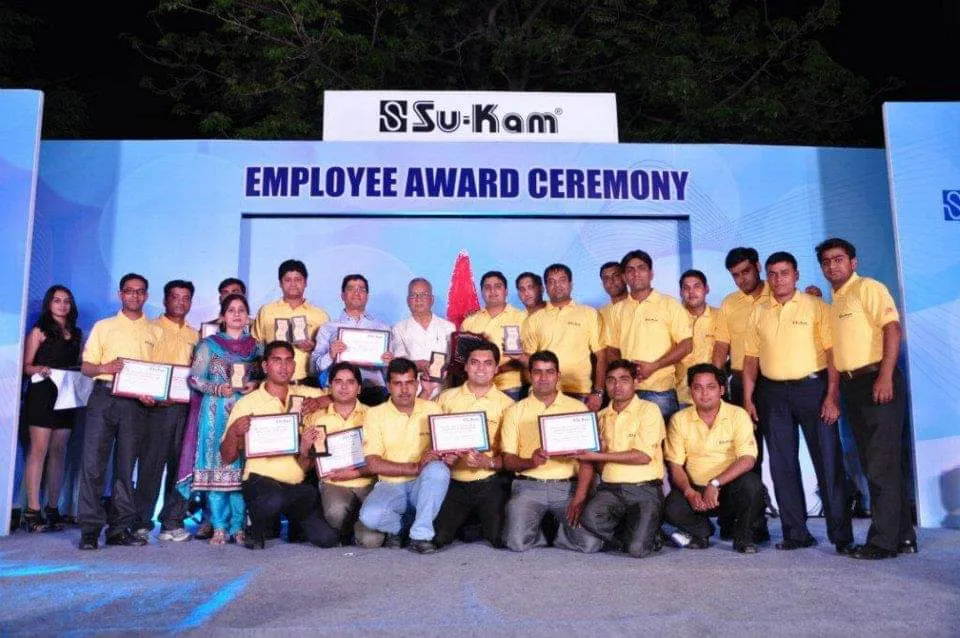
Merit on stage, not surname — an internal award evening where performers from across the company stood up for work they had earned, not blood they had inherited.
Strategy still originated with Sir’s instincts — the shikara covers, the YouTube channel, the sinewave bet — but the governance layer asked a different class of question: What happens if this fails? Who owns the downside? What does the audit trail look like? The same founder who trusted instinct in the market understood that on the questions where he genuinely did not know enough, the smartest thing a confident man can do is surround himself with people who know more.
That is the honest cost I owe this portrait. The governance culture Sir built made Su-Kam more durable and more legible to serious capital — Reliance’s 2006 investment was, in part, validation that the company could sit in adult company. It also made Su-Kam more contestable when the boardroom later became a war. A company with independent directors of Ganguly’s stature had a board worth fighting over — and fight they did. Sir’s expansion of the room until it was bigger than he was did not protect him from every storm. I understand now why he did it anyway. Shortcuts in governance buy peace until they buy catastrophe.
What the boardroom choice leaves behind
Most magazines skipped this chapter because governance does not photograph well. There is no trophy, no shikara, no Discovery Channel crew. There is a table, minutes, audits, and the slow work of building a company that could, in principle, outlast its founder.
That was Sir’s bet. The governance architecture he built earlier did not save the company from every later blow. Nothing could have, cleanly. But it tells you who he was when he still had a free hand: a man who went and found people worth answering to.
The man who had no one to answer to in the garage went and found Ganguly and Majumdar. The man who could have dynastified his board refused to seat his son. The man who could have kept the room smaller than himself expanded it until it was bigger than he was, and then sat in it and took notes.
That is rarer than any invention — and more fragile than any patent, because it depends on character repeating under pressure. I watched it repeat once. I watched it tested later when shareholders wanted a different kind of board altogether. The first story belongs here. The second belongs to what really happened to Su-Kam and to the Reliance chapter.
If you want the shorter, legacy-timeline version — the names, the pairing, what Sir said he was buying — read Su-Kam’s board: Exide and ABB leaders at his table. This essay is the inside reading: what it felt like to work in a company that was trying, seriously and not always comfortably, to govern itself like an institution.
Sir built products that changed Indian homes. He also built a boardroom that changed what “founder-led” was allowed to mean — at least for a while, in one Gurgaon company, under one man’s stubborn idea that merit should beat blood.
By a former associate of Kunwer Sachdev
Editorial Note · Independent Coverage
This article is part of an independent editorial series on invertermanofindia.com. It is written by a former associate of Kunwer Sachdev, drawing on first-hand observation during the period described and the boardroom culture, governance choices, and legacy sources cited above. It is not authored, ghost-written, edited or approved by Mr. Kunwer Sachdev, by Su-Kam Power Systems Ltd. as the company exists today, or by any current entity he leads. The views, framing and interpretations are the writer's alone. Full independence and dissociation policy: /disclaimer.
Disclaimer: invertermanofindia.com is an independent editorial legacy site.