By a former associate of Kunwer Sachdev
For decades, the architecture of domestic power backup was strictly partitioned: a heavy, humming metal inverter box sat on a shelf, while massive, acid-filled lead-acid batteries sat on the floor below, connected by thick, exposed copper cables. For most manufacturers, this separation was dictated by fundamental physics. Batteries generated heat, emitted corrosive fumes during charging cycles, and weighed too much to be supported within a single unified enclosure.
Kunwer Sachdev, however, hated the clutter. He looked at urban apartments where floor space was at a premium and saw an eyesore.
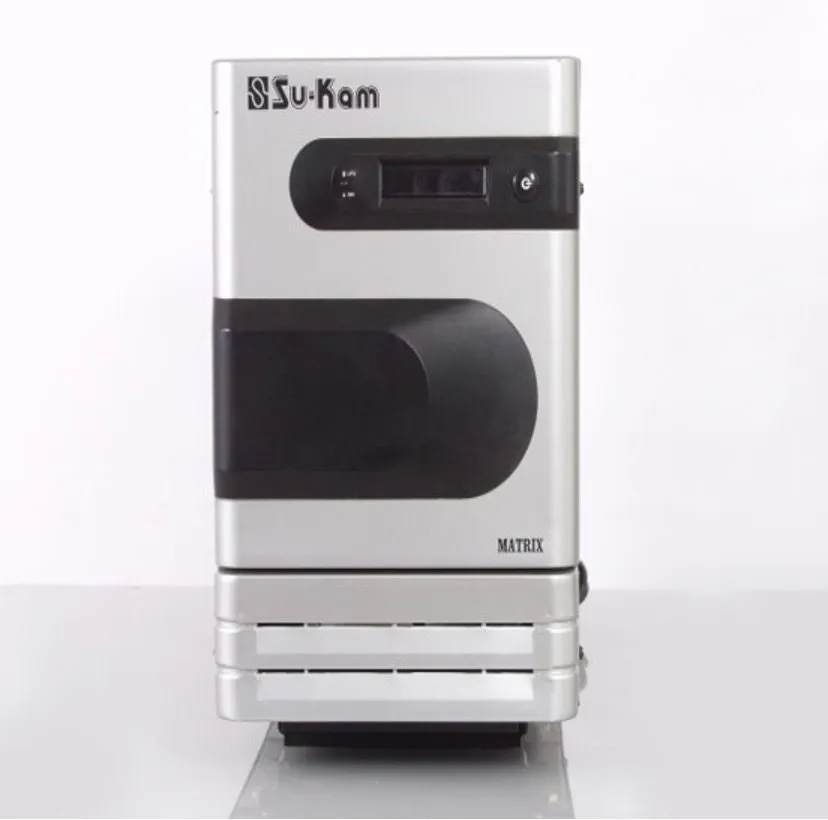
His directive to the R&D labs was simple, yet technically outrageous: “Put the battery inside the inverter. Make it a single, compact unit that a consumer can plug in like a standard home appliance.”

The Engineering Impossibility
When the concept for what would become the Matrix series was first tabled, veteran power-electronics engineers balked. Integrating a heavy tubular or flat-plate lead-acid battery inside an enclosed chassis alongside delicate microcontrollers, transformers, and switching MOSFETs presented a compound engineering nightmare:
- The Thermal Trap: Lead-acid batteries heat up during heavy charging and discharging cycles. Confining them inside a tight metal case risked cooking the internal circuit boards.
- Acid Fume Corrosion: Hydrogen and oxygen gas emissions from liquid electrolyte cells would rapidly oxidize delicate copper traces and PCB solder joints unless hermetically isolated or aggressively ventilated.
- Structural Load Limits: A heavy battery weighing tens of kilograms would warp or snap standard sheet-metal internal chassis during transit or routine handling.
Former R&D associates recall Sachdev refusing to accept “it’s physically impractical” as an answer. Instead, he pushed the team to rethink internal airflow dynamics, protective chemical-resistant interior linings, and heavy-duty structural bracing.
Reinventing the Enclosure & Ventilation
To make the Matrix a reality, the team had to innovate across multiple disciplines simultaneously:
- Forced Air Convection: Intelligent thermal-sensing fans were integrated to pull cool air across the electronics while actively venting battery compartment gases outward through isolated channels.
- Corrosion-Proof Shielding: Special barrier membranes and acid-resistant internal compartmentalization protected the high-frequency inverter boards from aggressive electrolyte vapors.
- Compact Storage Geometry: Working closely with battery designers, the engineering team optimized specialized compact cell configurations that could deliver high surge current without requiring massive floor-standing bulk.
When the Matrix series finally launched, it shattered the assumption that power backup had to be an intimidating, two-piece installation. It offered urban homeowners a clean, consolidated appliance that could be tucked away neatly into living spaces.
Archival Legacy
While modern energy storage has largely transitioned toward lithium chemistries, the Matrix project served as a crucial stepping stone in consumer-centric hardware design. It proved that when an entrepreneur pushes past conventional engineering limits, even mature, heavy technologies like lead-acid can be re-engineered for space-constrained modern living.
Archival Context & Related Chapters
- Read about the early design milestones that preceded it in The Trendy Inverter & LCD Display Revolution.
- Explore the foundational manufacturing breakthroughs in The Patent Obsession.
- Companion legacy chapter (physics, weight, and battery life): The Inverter That Physics Rejected — Matrix Inbuilt.
- Review the verified patent timeline and intellectual property filings at solarmanofindia.com/patents.
Editorial & Archival Note: This account is compiled from former R&D logs, engineering post-mortems, and historical product documentation from the Su-Kam ecosystem. Kunwer Sachdev exited Su-Kam in 2019 and is not responsible for any operations or communications of the company post-2018.
Disclaimer
Kunwer Sachdev is no longer associated with Su-Kam Power Systems Ltd. References to Su-Kam here are historical and biographical. His current work continues through Su-vastika and related ventures.
InverterManOfIndia is an independent third-party editorial site. It is not owned, operated, sponsored, or endorsed by Su-Kam Power Systems Ltd., Su-vastika Systems Pvt. Ltd., or related parties.
Editorial Note · Independent Coverage
This article is part of an independent editorial series on invertermanofindia.com. It is written by a former associate of Kunwer Sachdev, drawing on first-hand observation during the period described. It is not authored, ghost-written, edited or approved by Mr. Kunwer Sachdev, by Su-Kam Power Systems Ltd. as the company exists today, or by any current entity he leads. The views, framing and interpretations are the writer's alone. Full independence and dissociation policy: /disclaimer.
Disclaimer: invertermanofindia.com is an independent editorial legacy site.