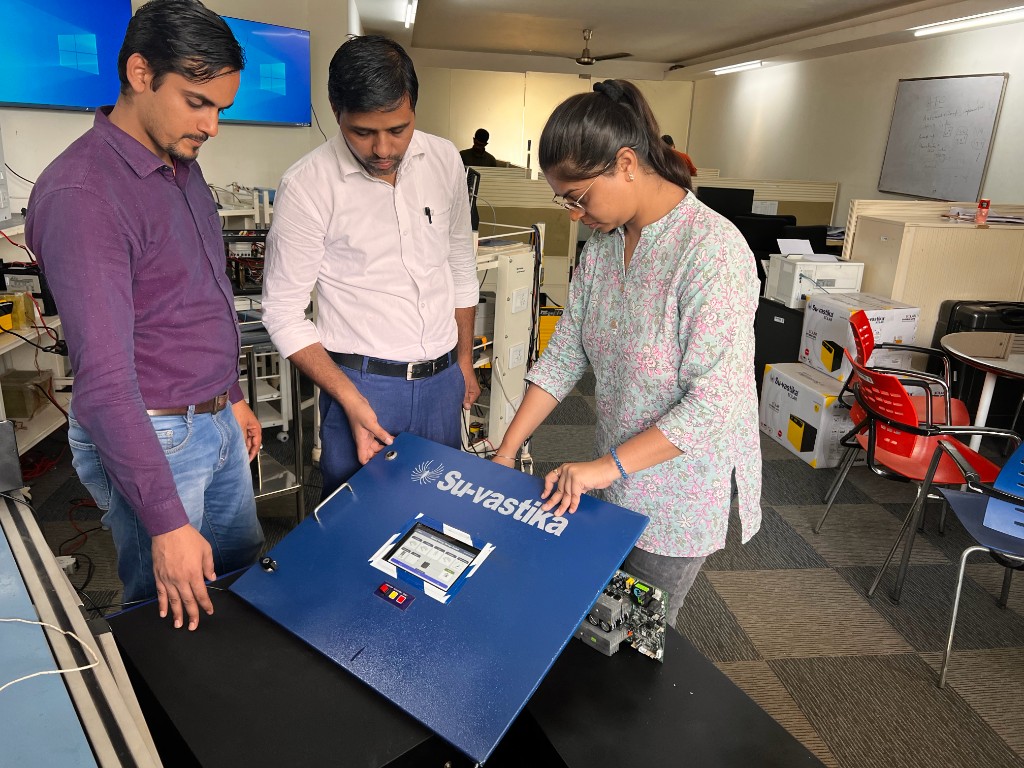
By a former associate of Kunwer Sachdev
For nearly thirty years, the DNA of Indian power backup was inextricably linked to lead-acid chemistry. Whether tubular or flat-plate, backup batteries were heavy, required regular water-topping maintenance, suffered from limited discharge cycles, and occupied substantial floor space. That market — shaped in the Su-Kam decades — proved India needed reliable home storage. It did not, by itself, deliver the chemistry that would replace those blocks.
When global lithium-ion technology began maturing, traditional manufacturers dismissed it as too expensive and fragile for India’s harsh ambient temperatures and chaotic grid fluctuations.
After 2019, Kunwer Sachdev’s teams at Su-vastika took that challenge as their core brief: look past lead-acid and build intelligent Battery Energy Storage Systems (BESS) that could survive Indian grids, Indian heat, and everyday household use.

The Thermal and Chemical Hurdle
Transitioning from passive lead-acid storage to active lithium systems was not simply a matter of swapping cells inside an inverter box. It introduced an entirely new set of engineering constraints:
- Thermal Stability and Safety: Unlike consumer electronics utilizing volatile chemistry, home power systems required ultra-stable variants. The R&D team prioritized LiFePO4 (Lithium Iron Phosphate) chemistry specifically because it resists thermal runaway at high temperatures, avoiding the safety hazards associated with other lithium formats.
- The Intelligence Gap: Lead-acid systems operated on crude voltage cut-offs. Lithium systems demanded a sophisticated Battery Management System (BMS) to constantly monitor individual cell voltages, balance charging currents, and protect against over-discharge or short circuits.
- Software Integration: Hardware could no longer operate in isolation. The inverter had to communicate dynamically with the battery pack via digital protocols, turning a dumb storage vessel into a smart, self-monitoring node.
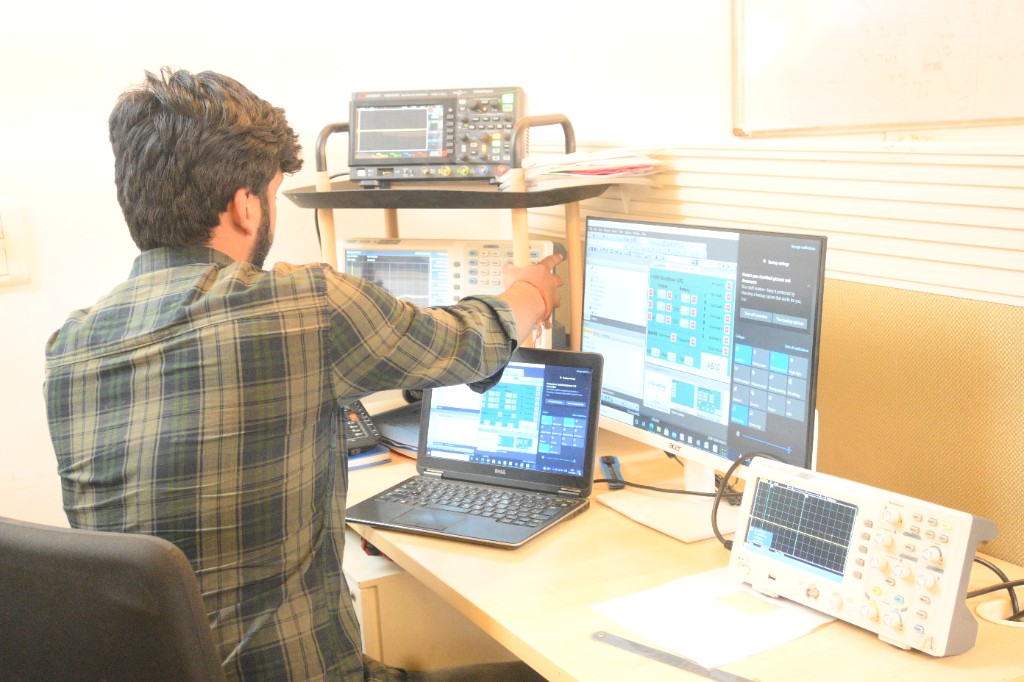
Former associates recall Sachdev pushing for rigorous field testing under severe grid conditions—simulating rapid voltage spikes, deep thermal stress, and continuous heavy cycling to ensure the units could survive real-world deployment across demanding residential environments.
Redefining Compact Power
The resulting shift toward lithium BESS fundamentally changed what a home UPS could look like. Gone were the massive floor-standing battery banks leaking fumes. In their place came sleek, high-density power units capable of delivering rapid-fire charging, deep discharge efficiency, and years of maintenance-free service.
By treating energy storage as an intelligent, software-driven ecosystem rather than a commodity chemical container, the Su-vastika R&D roadmap bridged the gap between traditional power backup and modern smart-grid readiness.
Archival Legacy
The transition to lithium BESS stands as a testament to forward-looking R&D strategy—proving that anticipating technological shifts requires breaking away from legacy comfort zones long before the broader market forces your hand. Su-Kam had defined India’s appetite for home backup; Su-vastika took on the chemistry and intelligence layer that would redefine it.
Archival Context & Related Chapters
- Read about the earlier spatial constraints in The Matrix Inbuilt Battery Revolution.
- Explore the renewable evolution in The Hybrid Solar PCU Revolution.
- Broader second-chapter context: From Su-Kam to Su-vastika.
- Review the verified patent timeline and intellectual property filings at solarmanofindia.com/patents.
Editorial & Archival Note: This account is compiled from former associates’ recollection of Su-vastika R&D work on lithium BESS and BMS after 2019, with Su-Kam referenced only as historical lead-acid market context. Kunwer Sachdev exited Su-Kam in 2019 and is not responsible for any operations or communications of that company post-2018.
Disclaimer
Kunwer Sachdev is no longer associated with Su-Kam Power Systems Ltd. References to Su-Kam here are historical and biographical. His current work continues through Su-vastika and related ventures.
InverterManOfIndia is an independent third-party editorial site. It is not owned, operated, sponsored, or endorsed by Su-Kam Power Systems Ltd., Su-vastika Systems Pvt. Ltd., or related parties.
Editorial Note · Independent Coverage
This article is part of an independent editorial series on invertermanofindia.com. It is written by a former associate of Kunwer Sachdev, drawing on first-hand observation during the period described. It is not authored, ghost-written, edited or approved by Mr. Kunwer Sachdev, by Su-Kam Power Systems Ltd. as the company exists today, or by any current entity he leads. The views, framing and interpretations are the writer's alone. Full independence and dissociation policy: /disclaimer.
Disclaimer: invertermanofindia.com is an independent editorial legacy site.