By a former associate of Kunwer Sachdev
After the market embraced the CHIC plastic-body inverter, proving that power backup devices could look like consumer electronics rather than industrial welding gear, Kunwer Sachdev wanted to push aesthetic boundaries even further.
If an inverter lived in a bedroom or a family drawing room, why shouldn’t it be a conversation piece? Why must utility hardware always look subdued?

The locomotive brief
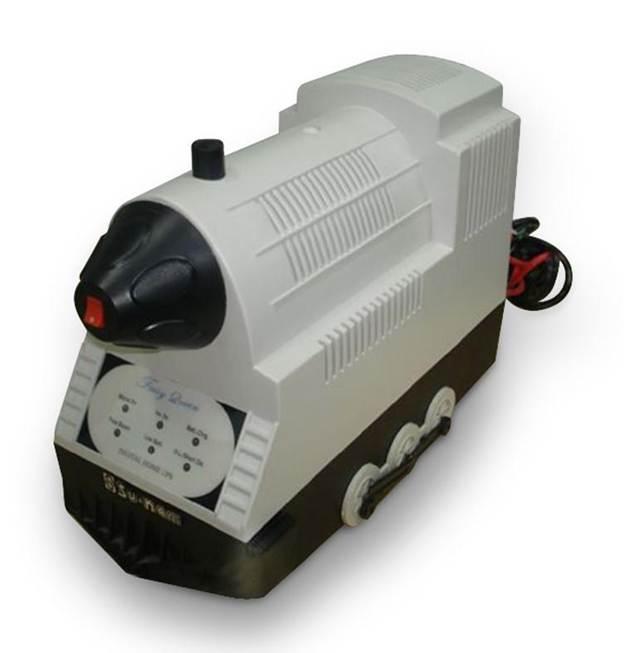
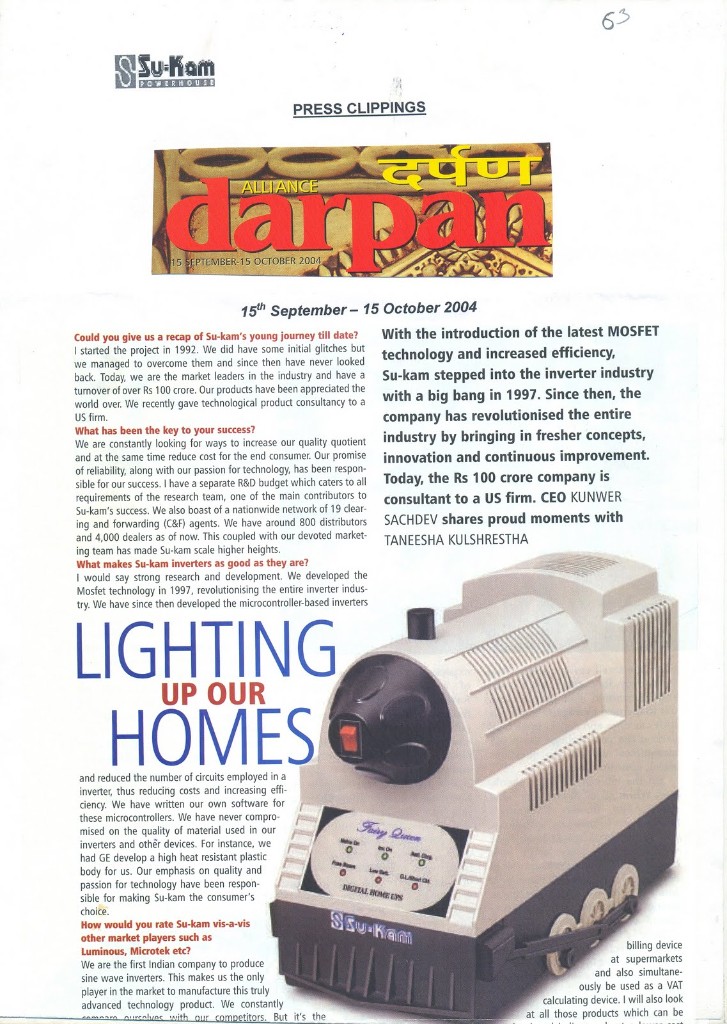
For the next conceptual leap, Sachdev looked deep into Indian history. He found his inspiration in the Fairy Queen — the legendary 1855 steam locomotive, recognised as one of the world’s oldest operating steam engines and a universal symbol of mechanical elegance.
Former R&D and design associates recall the exact brief he laid down on the drawing board:
“We want a drawing-room showpiece that delights children, not an industrial box shoved into a dark corner.”
The engineering team took up the challenge. The internal power electronics, microcontrollers, and transformer windings were optimised, while the industrial designers crafted a distinct, contoured plastic chassis styled after the sweeping lines of the historic locomotive. Months of prototyping, thermal testing, and electrical validation followed. Internally, the team was convinced they had built something entirely unprecedented for the Indian market.
The launch that collapsed at the gate
The Fairy Queen inverter was technically sound, visually striking, and completely original. But reality struck hard upon distribution.
What nobody caught during all the rigorous laboratory and performance testing was the packaging. The unique, asymmetrical geometry of the locomotive-inspired chassis — which made the Fairy Queen so visually arresting — also made it geometrically difficult to protect inside standard corrugated boxes during transit across India’s rough, unpaved logistics routes.
Shipments arrived at dealer showrooms with structural cracks and impact damage. Not just a handful, but enough to trigger immediate returns, frustrated dealer calls, and a sudden loss of momentum for a product that had barely reached the shelves.
The lesson that changed everything
Sachdev called an emergency review with the logistics and engineering teams. Rather than blaming the transport partners or writing off the design department, he delivered a blunt assessment:
“We did everything right with the product, and almost nothing right with the box.”
The Fairy Queen experiment was a costly commercial disappointment, but it permanently transformed how Su-Kam engineered its supply chain. From that year onward, packaging stopped being an afterthought. Drop tests, compression limits, corner impact simulations, and custom-moulded thermocol cushioning became mandatory elements of the product specification process.
Archival legacy
While the Fairy Queen never achieved the mass-market ubiquity of the CHIC or the Trendy, its ghost lives inside every ruggedised power-electronics casing produced since. It reinforced a core tenet of Sachdev’s philosophy: a product must earn its right to exist in a home, and the journey from the factory floor to the customer’s drawing room is an inseparable part of engineering excellence.
The fuller legacy chapter of this experiment also sits in the archive at The FairyQueen locomotive packaging disaster.
Archival context & related chapters
- CHIC plastic inverter — India Today Innovation of the Decade
- The Trendy LCD display revolution
- The Patent Obsession
- Legacy: FairyQueen packaging disaster
- Full searchable register: solarmanofindia.com/patents
Editorial & archival note: This account is compiled from recollection of former associates who worked alongside Su-Kam R&D and product teams during the period described, alongside the design post-mortem that followed the launch. Kunwer Sachdev exited Su-Kam in 2019 and is not responsible for any operations or communications of the company under later ownership.
Disclaimer
Kunwer Sachdev is no longer associated with Su-Kam Power Systems Ltd. References to Su-Kam here are historical and biographical. His current work continues through Su-vastika and related ventures.
InverterManOfIndia is an independent third-party editorial site. It is not owned, operated, sponsored, or endorsed by Su-Kam Power Systems Ltd., Su-vastika Systems Pvt. Ltd., or related parties.
Editorial Note · Independent Coverage
This article is part of an independent editorial series on invertermanofindia.com. It is written by a former associate of Kunwer Sachdev, drawing on first-hand observation during the period described. It is not authored, ghost-written, edited or approved by Mr. Kunwer Sachdev, by Su-Kam Power Systems Ltd. as the company exists today, or by any current entity he leads. The views, framing and interpretations are the writer's alone. Full independence and dissociation policy: /disclaimer.
Disclaimer: invertermanofindia.com is an independent editorial legacy site.