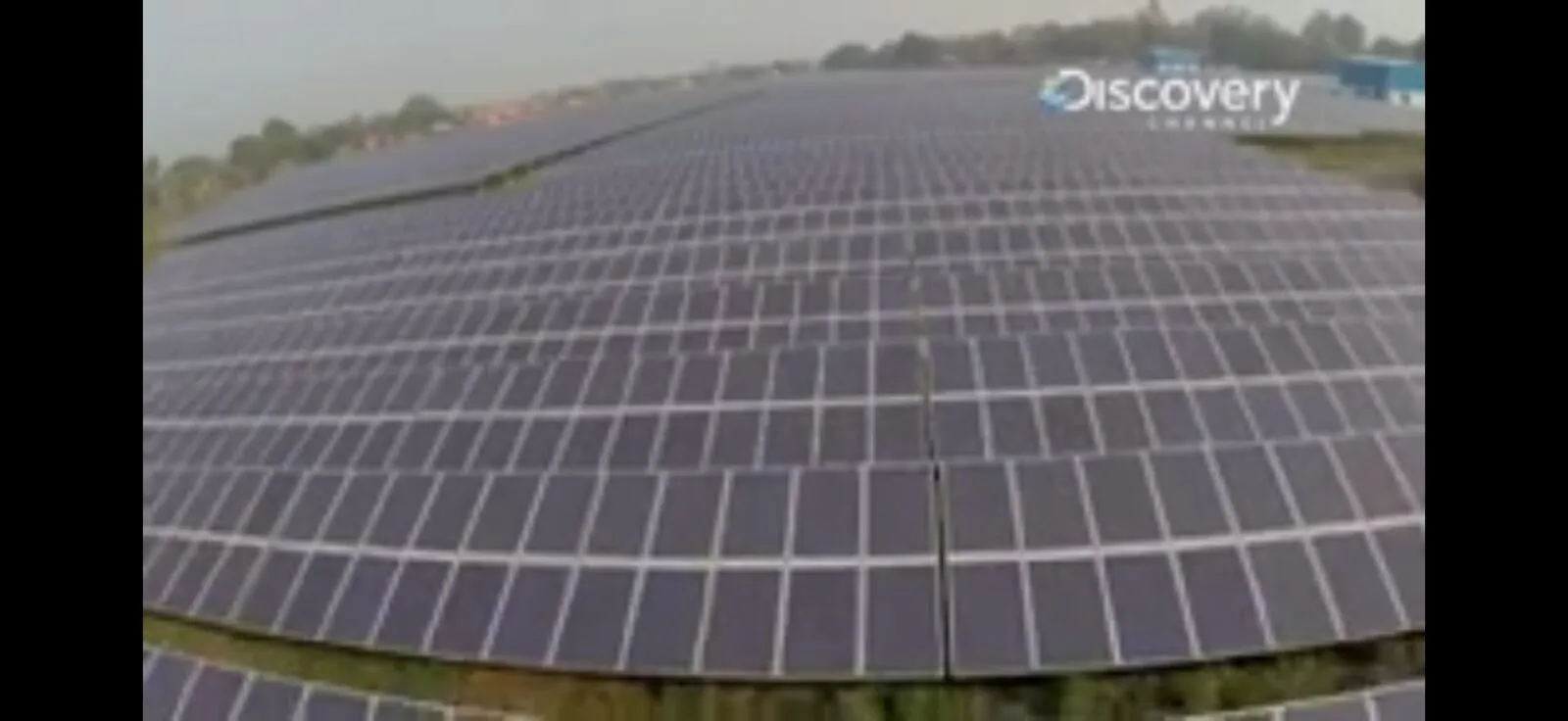

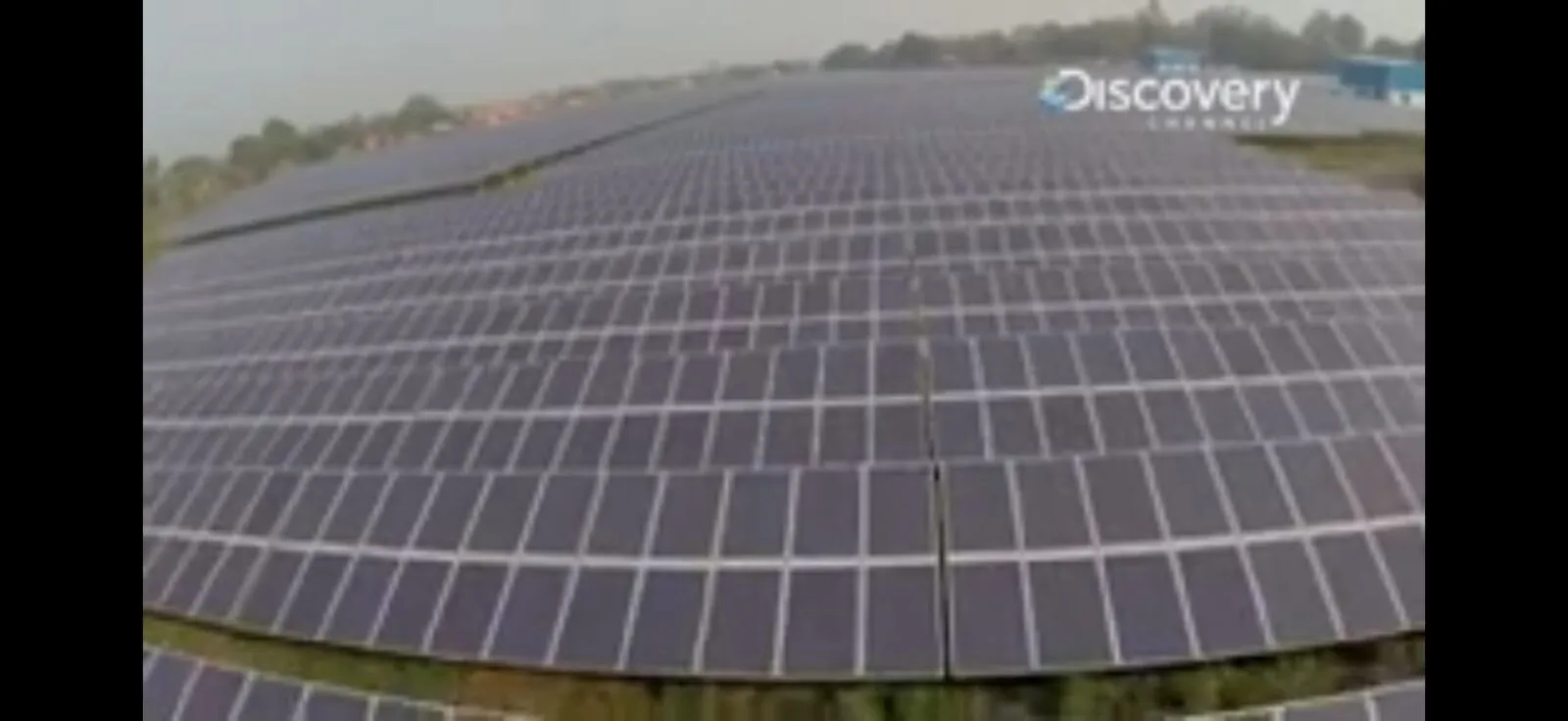
The 1 MW solar project Su-Kam built on the rooftops of Punjab Engineering College, Chandigarh, around 2015 — reported by Energynext at the time as the company having “bagged a project to commission a 1 MW solar power plant” for the college — has, with hindsight, two stories sitting inside it.
The visible story is a campus saving roughly half its electricity load and around Rs 1 crore a year. The second, less visible story is the more consequential one: the way that single project changed how every Indian institution after it would learn to buy solar.
To see why, you have to read the project the way a college finance committee or a hospital procurement officer would have read it at the time — not as a piece of engineering, but as a permission slip. Until PEC's megawatt was switched on and running, the institutional buyer in India had to make every solar decision in a vacuum. There was no Indian-built campus megawatt to point to. There was no clean reference number for what such a project could actually save. There was no Indian power-electronics company that could publicly stand behind a 1 MW campus install.
After PEC, all three of those vacuums had been filled at once.
The Template
What PEC standardised, line by line
The PEC project did not just generate electricity. It generated a procurement template that other Indian institutions began to follow, sometimes consciously, sometimes by quiet osmosis. Five elements of that template are worth naming:
1. The credible scale. PEC's number was 1 MW, not 100 kW. That mattered. Below a megawatt, an institutional rooftop install reads as a green-PR exercise. At a megawatt, it begins to read as a real generation asset. PEC made the megawatt the new floor for serious institutional solar in India.
2. The savings story, in rupees. The publicly cited number — roughly Rs 1 crore per year of avoided electricity cost — gave every other CFO in the country a back-of-envelope they could trust. Once one campus had said "we save a crore a year," every other campus could ask their own electricity auditor to model their own version of that math.
3. The engineering credibility. Su-Kam had two decades of inverter and power-electronics work behind it before PEC. The PEC install sat on top of that base — the inverter and BOS engineering wasn't being attempted for the first time, only being applied to a rooftop scale that was new. That mattered to procurement officers who had been (rightly) sceptical of vendors with one good slide deck and no operating history.
4. The grid-integration template. PEC's system was designed to feed cleanly into the campus' existing distribution network, with the public utility supplying the difference. That on-grid architecture quietly became the default for institutional installs in India that followed. Every CFO who heard "campus consumes solar first, grid backs up the rest" stopped picturing diesel-style islanded systems and started picturing electricity bills that would fall.
5. The vendor-as-partner pattern. Critically, the PEC project was not a one-week vendor handover. It was an ongoing engineering relationship: design, install, commission, monitor, maintain. That model, of treating the EPC as a long-term partner rather than a transactional supplier, is now table stakes for institutional solar in India. PEC was one of the early visible templates of it.

The Quiet Spread
Why an Indian college rooftop kept showing up in other Indian boardrooms
It is hard to draw a single straight line from PEC to any one specific later install. Institutional solar in India scaled for many reasons — falling panel prices, MNRE policy support, state-level rooftop schemes, net-metering frameworks, and a generation of EPC companies that grew up alongside SECI auctions. PEC's role was not as the only cause; it was as the visible Indian proof point that anyone making a procurement case could point to.
The pattern that spread was, in essence, the PEC pattern: a serious campus or commercial roof, a credible Indian vendor, an on-grid integration with the existing distribution, an explicit avoided-cost story, and an ongoing maintenance relationship. The years after PEC saw this pattern repeated across hundreds of Indian institutions — colleges, hospitals, government complexes, factories, IT parks — until institutional solar stopped being a category that needed an evangelist.
That is the second-order legacy of the 1 MW at Punjab Engineering College. It is harder to measure than the headline savings number. It is the part where the rooftop in Chandigarh showed up, by indirect citation, in committee rooms in Pune and Hyderabad and Coimbatore where someone was being asked: has anyone in India actually done this at a megawatt? And the answer, after PEC, was: yes — on a campus, by an Indian company, and the numbers are public.
The Wider Solar Footprint
What else Su-Kam was building around PEC
The PEC megawatt did not stand alone. Around it, Su-Kam was simultaneously running one of the broadest solar product portfolios in the Indian power-backup industry. The company took solar lighting to India–Pakistan border posts manned by the BSF; mini solar plants were inaugurated in constituencies with Dr. A.P.J. Abdul Kalam doing the honours; an alliance with Trojan Battery brought storage into the picture; and a partnership with Tata Power Delhi extended distributed solar in the capital. The Hindu BusinessLine tracked the rooftop demand curve as Su-Kam's solar PCUs and hybrid inverters moved from showrooms to actual roofs. The wider arc of that push is covered in how Kunwer Sachdev sparked a solar movement in India.
And the Sun Fuel feature on the Discovery Channel was running underneath all of it, framing solar to Indian audiences the way Su-Kam had always framed it — as a fuel, like petrol, except free, infinite, and Indian. The PEC megawatt was, in many ways, the on-the-ground proof of that framing.
The Lesson
What founders building infrastructure-of-firsts can learn from PEC
The PEC case is worth re-telling because it captures a pattern that is almost always undersold. The first project of any new infrastructure category does not just generate value for its customer. It generates a template for the entire next decade of customers. The economics of the first project rarely justify the effort by themselves. The economics of the next thousand projects, however, are made possible by the first one having existed.
The lesson for founders building in any new infrastructure category — energy, mobility, storage, water, anything where institutional buyers move slowly — is to take the first hard install for what it really is: not a contract to be won, but a permission slip to be issued. The institutions that come after will quietly cite it for years.
The 1 MW at PEC was a project. It was also, with hindsight, a permission slip the size of a college rooftop.
Editorial Note · Independent Coverage
This article is part of an independent editorial series on invertermanofindia.com. It is written by the site's editorial team, drawing on publicly reported coverage of the PEC–Su-Kam project, on the broader press archive cited above, and on first-person recollections from associates who worked at Su-Kam during this period. It is not authored, ghost-written, edited or approved by Mr. Kunwer Sachdev, by any company he was previously associated with, or by any company he is currently associated with. The views, framing and interpretations in this article are the editors' alone. Specific figures cited (1 MW capacity, ~50% load coverage, Rs 1 crore annual saving, third-largest solar project in Chandigarh at the time) reflect the publicly available record at the time of writing; readers are encouraged to verify against current PEC and Chandigarh administration sources for the latest values.
Disclaimer
Mr. Kunwer Sachdev, the original founder and visionary behind Su-Kam, is no longer associated with Su-Kam Power Systems Ltd. He has not been involved in the management, operations, or decision-making of the company for several years. Any products, services, communications, or representations made under the Su-Kam name have no connection to Mr. Kunwer Sachdev. His current efforts are entirely focused on new innovations and ventures under different entities, including his latest initiative, Su-vastika, which is redefining the energy storage and power backup industry.
Disclaimer: invertermanofindia.com is an independent editorial legacy site.