By a former associate of Kunwer Sachdev
Every hardware company in India has the same quiet wound, and almost none of them talk about it: the service department. It is where the warranty promises come home to be paid, and it is, structurally, the hardest part of the whole business to run well. Su-Kam was no exception — and what Sachdev eventually did about it is, the chronicler thinks, one of the most original management decisions of his career.
The wound, named honestly
Sachdev does not soften the diagnosis. The service department, he says, faced significant and persistent problems: high turnover, inefficiency, and fraud. These are the three horsemen of every field-service operation in the country, and Su-Kam fought them the way every serious company fights them — with training, with development, with culture. And still, by his own admission, the company could not build a service team that was both sustainable and high-performing. The harder it managed the department, the more the department resisted being managed.
This is the moment most companies simply accept the loss and absorb it as a cost of doing business. Sachdev did something stranger.
The inversion
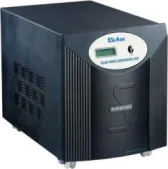
Instead of managing the service function harder, he decided to stop owning it. Su-Kam outsourced its entire service operation — but not to a faceless third party. It outsourced the work to its own people.
The company went to its existing service engineers — the very men inside the struggling department — and, with incentives and active support, encouraged them to leave the payroll and become independent service providers. The salaried technician became a small business owner. The man who used to be paid to fix inverters now ran the territory in which inverters got fixed.
The effect on incentives was total. An employee whose pay does not change whether he fixes three units or thirteen behaves very differently from an entrepreneur whose income depends directly on the customers he keeps happy. Overnight, the turnover problem, the efficiency problem and — crucially — the fraud problem changed character, because the people now had skin in the game. You do not defraud a business you own.
What it actually created
Sachdev’s account of the results is matter-of-fact, and the chronicler will let it stand. The model reduced operational cost — the company was no longer carrying the dead weight of a department that could not be made to work. It created a competitive service market around the brand, with independent providers motivated to out-serve one another. And service quality and efficiency improved precisely because the people delivering it were now owners, not employees.
The clearest proof that it worked is the same proof that validates every real Su-Kam innovation: the rest of the industry copied it. The outsourced-service model Sachdev pioneered out of necessity became a template other companies adopted, exactly as they had adopted the Home UPS category name and the plastic-body inverter before it.
The thread that runs through everything
The chronicler cannot help noticing the symmetry. The man who, decades later, would stand in front of company employees and tell them “you are not working for your company — you are working for yourself” had, years earlier, made that sentence literally true for an entire department. He did not just believe people do their best work when they own the outcome. He restructured a failing part of his company around that belief — and it worked.
The conventional founder sees a broken department and tries to control it more tightly. Sachdev saw a broken department and handed it its freedom. That instinct — that ownership beats supervision, that a motivated owner outperforms a managed employee every time — is the same instinct now powering the founder-tools he is building at kunwwer.ai.
Most bosses fire the people. He fired the jobs, and kept the people — by making them their own bosses.
More on Kunwer Sachdev across his work: the current power-systems company Su-vastika · the AI second act at kunwwer.ai · the lithium-inverter resource lithiuminverter.in · the older industry property inverterindia.com. For independent reads: Wikipedia and the Su-Kam Power Systems entry.
By a former associate of Kunwer Sachdev