By a former associate of Kunwer Sachdev
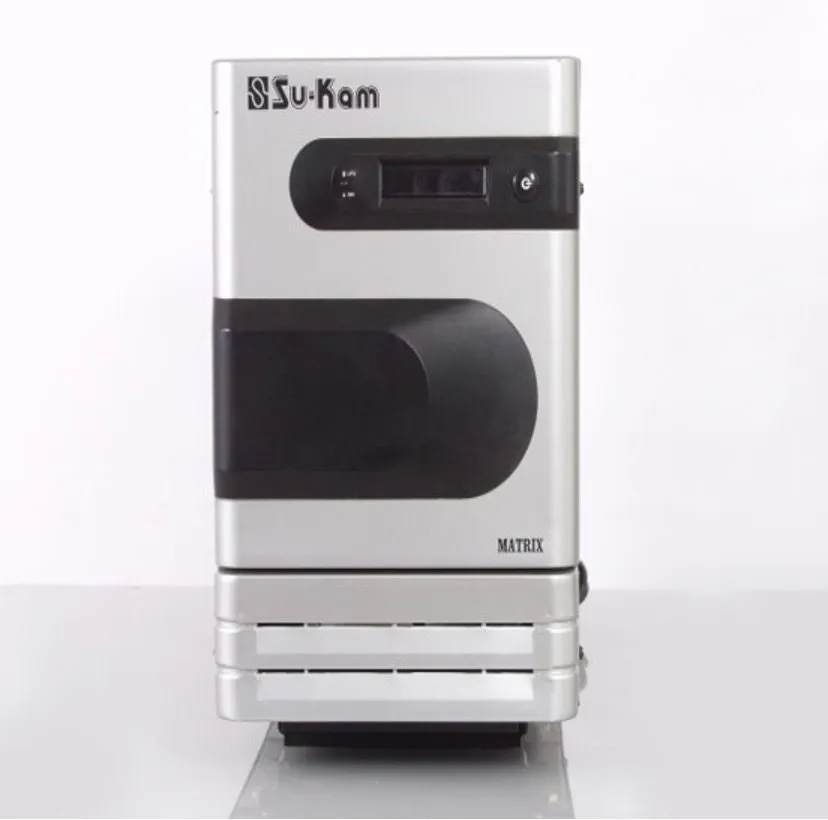
The chronicler has noticed that the products people remember about Su-Kam are the triumphs — the plastic Chic, the first sinewave inverter, the Home UPS that named a category. But the products that explain the founder are often the ones that did not work. The FairyQueen was one. The Matrix Inbuilt Inverter was another.
The idea
The premise was genuinely elegant, and ahead of its time. Every inverter installation in India involved two separate things: the inverter on the wall, and a large lead-acid battery sitting beside it, with cables, a stand, acid, and maintenance. What if you simply put the battery inside the inverter? One box. One product. Nothing to wire together, nothing exposed, nothing for the customer to get wrong.
So Su-Kam designed exactly that: an inverter with a built-in SMF (sealed maintenance-free) battery. On paper it was the cleanest power-backup product the market had seen — the kind of integrated thinking that, two decades later, the whole industry would chase with lithium.
The physics that won the argument
The trouble, as Sachdev recounts with the flatness of a man who has made peace with it, was that the elegant idea had to obey physics. To deliver meaningful backup, the built-in battery had to be large — a 150AH SMF battery, sealed inside the unit. And a 150AH battery weighs what a 150AH battery weighs.
The result was a product that was extremely heavy. Transportation became a challenge in its own right — moving the unit, shipping it, getting it up the stairs of an Indian home was a problem the elegance on paper had quietly ignored. And there was a second, deeper flaw: sealed inside the box, those batteries did not last long. The very integration that made the product beautiful made the consumable part of it — the battery — hard to service and quick to degrade.
An inverter you cannot easily move, built around a battery you cannot easily replace, is a beautiful idea that the market is right to reject. And it did.
Why a failure earns its own chapter
The chronicler includes the Matrix deliberately, because the temptation in a chronicle like this is to launder the record into an unbroken run of firsts. Sachdev himself does not do that, and the honesty is the point. He files the Matrix exactly where it belongs: an ambitious, integrated product whose idea was correct and whose execution was defeated by weight and battery life.
And note what the failure was not. It was not a failure of nerve, or of imagination, or of engineering ambition. It was, if anything, a failure of too much ambition — reaching for full integration before the battery chemistry of the day could support it. The same restless instinct that produced the Matrix also produced the genuine breakthroughs; you do not get one without risking the other. A founder who never shipped a Matrix is a founder who never tried anything that could fail.
The most telling detail is what came next. The dream of an integrated, intelligent, self-contained power unit did not die with the Matrix — it simply waited for the chemistry to catch up. The lithium and battery-management work the founder pursues now, at Su-vastika, is the Matrix’s idea finally meeting a battery light enough and long-lived enough to deserve it. The heavy, beautiful idea was not wrong. It was early.
More on Kunwer Sachdev across his work: the current power-systems company Su-vastika · the AI second act at kunwwer.ai · the lithium-inverter resource lithiuminverter.in · the older industry property inverterindia.com. For independent reads: Wikipedia and the Su-Kam Power Systems entry.
By a former associate of Kunwer Sachdev